
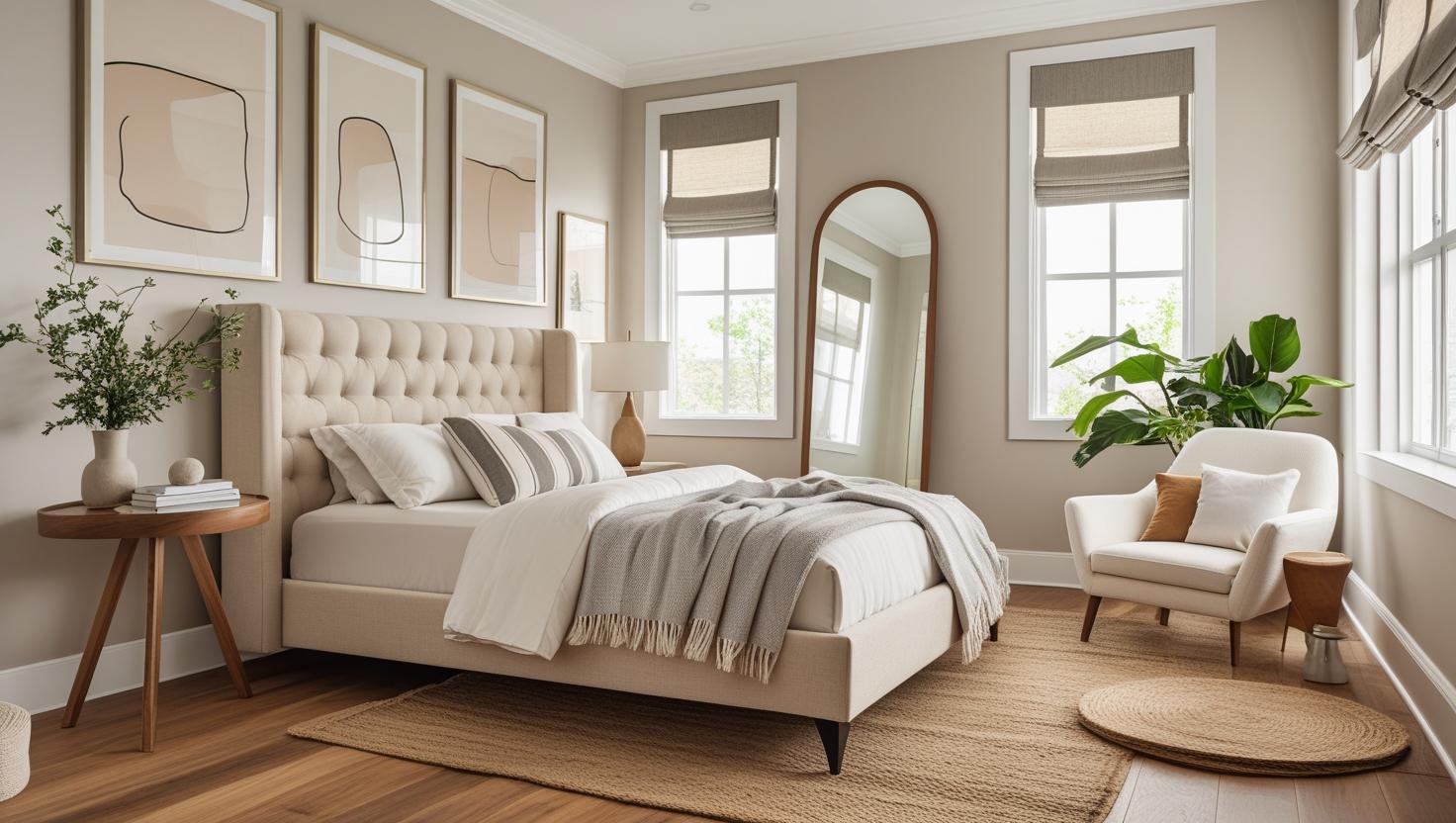
7 Ways an Upholstered Ottoman Bed Maximizes Storage in 2025: Transform Your Bedroom Into a Clutter-Free Haven
Did you know that the average bedroom contains over 300 items, yet most people only use 20% of their storage space effectively? If you’re tired of tripping over shoes, hunting for spare bedding, or dealing with cluttered nightstands, 7 ways an Upholstered Ottoman Bed maximises storage might be your game-changer! These ingenious furniture pieces combine the comfort of a luxurious bed with the practicality of hidden storage, making them perfect for modern homes where every square foot counts. Whether you’re living in a cosy apartment or simply want to maximise your master bedroom’s potential, upholstered ottoman beds offer solutions that traditional beds simply can’t match.
Ready to transform your cluttered bedroom into an organised sanctuary? Discover our complete collection of upholstered ottoman beds and find the perfect storage solution that combines luxury comfort with maximum functionality.
Hidden Storage Compartment Replaces Traditional Box Springs
I’ll be honest – I was properly sceptical when my mate first told me about Ottoman beds. “It’s just a bed that opens up,” she said, and I thought, “Right, so basically a massive toy box for adults?” But after living with one for nearly two years now, I can tell you that calling it just storage is like calling a smartphone just a phone.
How the Entire Bed Base Lifts to Reveal Massive Storage Space
• The lifting mechanism is genuinely impressive – When you first see an ottoman bed open, it’s like watching a magic trick. The entire mattress and base lift as one unit, revealing this cavernous space underneath that you never knew existed. I remember the first time I opened mine; I actually said “bloody hell” out loud because the storage area was so much bigger than I’d imagined.
• No more crawling under the bed – Gone are the days of army-crawling under your bed frame to retrieve that jumper you shoved back there six months ago. Everything is right there at waist height when you lift the base. My back thanks me daily for this upgrade, especially after years of contorting myself to reach things stored under traditional beds.
• The space is properly usable – Unlike the awkward, low-ceiling area under a normal bed, this storage compartment has full height clearance. I can fit my winter duvet standing upright in there, which was impossible with my old divan bed setup.
Storage Capacity Comparison with Traditional Box Spring Beds
• Triple the accessible storage space – Where a traditional bed might give you maybe 30cm of crawl space underneath (if you’re lucky), an ottoman bed typically offers 35-40cm of full-height storage. That’s the difference between shoving a few shoe boxes under there versus storing entire seasonal wardrobes.
• No wasted corner spaces – Traditional beds create these dead zones in the corners where dust bunnies go to retire. Ottoman beds use every single inch of the base area. I measured mine once – it’s roughly 1.4 metres by 2 metres of storage, which is basically like having an extra wardrobe that doesn’t take up floor space.
• Better organisation possibilities – Because you can see everything at once when the bed’s open, you actually use the space properly. With my old bed, things would get pushed to the back and forgotten about for years. Now I’ve got clear storage boxes arranged like a proper filing system.
Hydraulic Lifting Mechanisms Make Access Effortless
• Gas struts do the heavy lifting – The hydraulic pistons are absolute game-changers. Even with a heavy memory foam mattress, I can lift the bed base with one finger. Seriously. My 12-year-old nephew can open it without breaking a sweat, which says everything about how well-engineered these mechanisms are.
• Smooth, controlled movement – There’s no sudden dropping or slamming shut. The gas struts control the descent so gently that I’ve never worried about trapping fingers or damaging stored items. It’s like having a soft-close kitchen cupboard, but for your entire bed.
• Safety features built in – Most decent ottoman beds have safety hinges that prevent the base from falling if the gas struts fail. Mine’s got these little metal arms that catch the base if something goes wrong. Haven’t needed them yet, but it’s reassuring to know they’re there.
Protection Features Keep Items Dust-Free and Organised
• Enclosed storage beats open shelving – The sealed compartment means no dust settling on your stored items. I’ve pulled out clothes after six months, and they’re as clean as when I put them in. Compare that to anything stored under a traditional bed, which seems to attract every bit of dust and pet hair in the house.
• Moisture protection in most models – The base usually sits slightly raised off the floor, which helps prevent damp issues. My bedroom’s on the ground floor and can get a bit humid, but I’ve never had problems with musty smells or moisture damage to stored items.
• Easy to clean and maintain – When you do need to give the storage area a proper clean, you can actually get in there with a hoover. Try doing that under a normal bed without moving the entire thing.
Weight Capacity Considerations for Heavy Storage Items
• Check the manufacturer’s limits – Most ottoman beds can handle 20-30kg of stored items on top of the mattress weight, but don’t just guess. I learned this the hard way when I tried to store my entire collection of university textbooks in there. The gas struts started struggling after a few months.
• Distribute weight evenly – Heavy items like winter coats or boots should be spread across the storage area, not all bunched up in one corner. I use the heavier stuff around the edges and lighter items in the middle -it seems to work better for the lifting mechanism.
• Consider what you’re actually storing – Be realistic about weight. A few duvets and some out-of-season clothes? No problem. Your entire book collection and that box of old vinyl records? Probably pushing it. I’ve found that bulky but lightweight items work best – think pillows, sleeping bags, and seasonal clothing rather than anything properly heavy.
The bottom line is that Ottoman beds have completely changed how I think about bedroom storage. It’s not just about having more space – it’s about having better, more accessible space that is actually used, rather than becoming a graveyard for forgotten items. Experience the magic of hydraulic lifting mechanisms for yourself! Shop the Lizzy Ottoman Upholstered Bed Frame and discover how easy access to massive storage space can revolutionise your bedroom organisation.
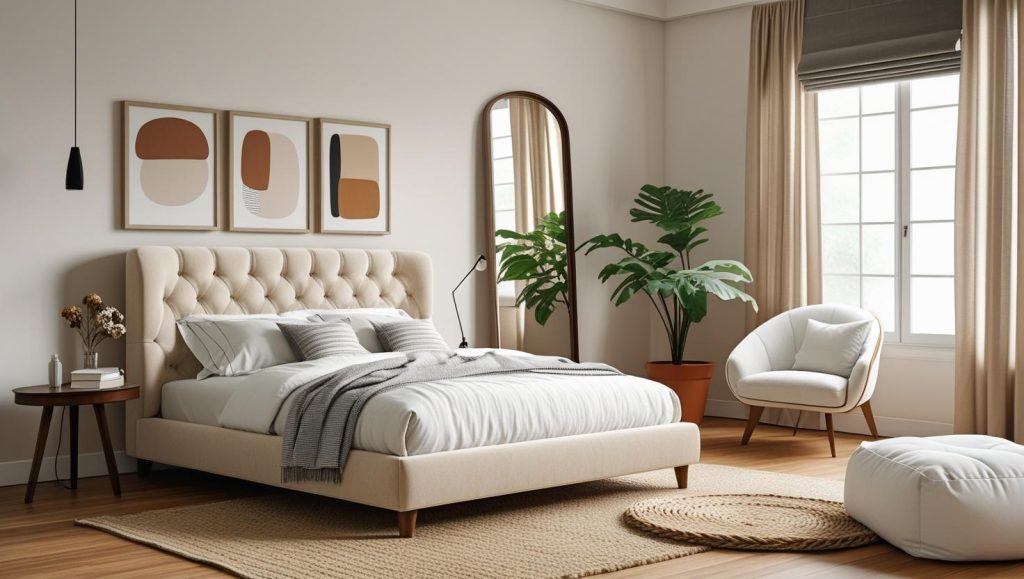
Seasonal Clothing Storage Made Simple and Accessible
Right, let me tell you about the game-changer that sorted my seasonal clothing nightmare once and for all. I used to be one of those people with winter coats draped over every chair come March, and summer dresses still hanging about in November because I simply had nowhere to put them. My wardrobe was basically playing musical chairs with the seasons, and I was losing every round.
Storing Bulky Winter Coats, Boots, and Seasonal Accessories Out of Sight
• Heavy coats fit perfectly when laid flat – This was my biggest revelation. Instead of trying to hang my massive puffer jacket in an already-stuffed wardrobe, I can lay it flat in the ottoman storage. Takes up way less space than you’d think, and there’s no weird creasing from being squashed between other clothes. My Canada Goose coat (yes, I’m one of those people) fits beautifully alongside two other winter jackets.
• Boot storage without the boot rack chaos – Boots are properly awkward to store, aren’t they? Too tall for most shelves, too bulky for shoe racks. In the Ottoman bed, I can fit about 8 pairs of boots standing upright along one edge. Wellington boots, hiking boots, winter boots – they all line up like little soldiers. No more tripping over them in the hallway.
• Seasonal accessories have their own designated zones – Scarves, gloves, woolly hats, summer beach bags – all that seasonal gubbins that clutters up your life for half the year. I use small fabric boxes to keep everything organised by season. The summer box has sun hats, flip-flops, and beach towels, while the winter one’s got thermal gloves and those hand warmers that never seem to work when you actually need them.
Vacuum-Sealed Storage Bags Maximise Space Efficiency
• Space compression is genuinely mind-blowing – I was sceptical about vacuum storage bags until I tried them. My winter duvet went from taking up a quarter of the storage space to about the size of a large cushion. Same with bulky jumpers – five chunky knits compressed down to the thickness of a paperback book. It’s like magic, but with more plastic and fewer rabbits.
• Not everything should be vacuum-sealed, though – Learned this the hard way with my leather jacket. Some materials don’t appreciate being squashed for months on end. Stick to cotton, polyester, and synthetic fills. Natural down can lose its loft if compressed too long, so I only vacuum-seal my synthetic-fill coats.
• Rolling technique works better than folding – Before sealing, roll your clothes instead of folding them. Takes up less space initially and seems to compress better. Plus, when you unseal everything, there are fewer creases to deal with. My mum taught me this trick, and she’s basically the Marie Kondo of our family.
Organisation Tips for Rotating Seasonal Wardrobes Seamlessly
• Label everything like your life depends on it – I cannot stress this enough. Use a label maker, masking tape, whatever works. “Summer tops,” “Winter work clothes,” “Beach holiday stuff” – be specific. There’s nothing worse than opening five identical storage boxes looking for that one jumper you need for an unexpected cold snap.
• Create a seasonal swap schedule – I do mine twice a year: end of March and end of September. Mark it in your calendar like a proper appointment. Spend a Saturday morning doing the full swap – summer stuff goes in, winter stuff comes out, or vice versa. Makes the whole process feel less overwhelming.
• Keep a “transition wardrobe” accessible – British weather is mental, so I always keep a few versatile pieces in my regular wardrobe year-round. Light cardigan, denim jacket, one pair of boots. Saves you from having to dig through storage every time the weather can’t make up its mind.
Climate Control Benefits of Enclosed Storage for Delicate Fabrics
• Consistent temperature prevents fabric damage – The enclosed storage space maintains a more stable temperature than most wardrobes. My cashmere jumpers come out looking exactly as they went in, no moth holes or weird musty smells. The sealed environment protects against those temperature fluctuations that can damage natural fibres.
• Humidity control keeps everything fresh – Unlike storing clothes in the loft or garage, the ottoman storage doesn’t get damp or overly dry. I chuck in a few silica gel packets (saved from shoe boxes) to absorb any excess moisture. Haven’t had any issues with mildew or that horrible damp smell that sometimes plagues seasonal storage.
• Protection from dust and pet hair – My cat seems to think every piece of clothing is his personal bed. The sealed storage means I’m not spending ages lint-rolling everything when the seasons change. Clothes come out clean and ready to wear, not covered in six months’ worth of household dust.
Quick Access for Unexpected Weather Changes
• Strategic placement of frequently-needed items – I keep my most-likely-to-be-needed pieces near the lifting edge of the bed. Light rain jacket, one warm jumper, basic boots. If there’s a sudden cold snap in April, I’m not emptying the entire storage area to find something warm.
• Emergency weather box stays accessible – Small container with absolute essentials: lightweight, waterproof, warm hat, gloves. Lives right at the front of the storage area. Has saved me countless times when the weather forecast gets it spectacularly wrong.
• Quick-grab system for work clothes – Keep one smart coat and one casual jacket easily accessible during transition seasons. Nothing worse than running late for work and realising your only appropriate jacket is buried under three months of summer clothes.
The beauty of using an ottoman bed for seasonal storage is that it’s all right there in your bedroom. No trudging up to the loft, no rummaging through under-stair cupboards. Just lift the bed, grab what you need, job done. It’s turned seasonal clothing rotation from a dreaded chore into something I can actually manage without having a complete meltdown. Stop playing wardrobe musical chairs with the seasons! Browse our Sophia Ottoman Bed Frame and create the perfect seasonal clothing storage system that keeps everything organised and easily accessible year-round.
Bedding and Linen Organisation Without Dedicated Closet Space
Let me paint you a picture of my old bedding situation: spare sheets stuffed in random drawers, guest bedding crammed into a hall cupboard with theHooverr, and my winter duvet living in a bin bag under the stairs like some sort of textile refugee. It was chaos, and I spent more time hunting for matching pillowcases than actually sleeping. The Ottoman bed completely transformed this nightmare into something that actually works.
Storing Extra Sheet Sets, Comforters, and Pillows in One Convenient Location
• Everything bedding-related lives in one spot – This is the absolute game-changer. No more checking three different cupboards to find a complete sheet set. I’ve got my everyday bedding, two spare sets, seasonal duvets, and about six extra pillows all stored in the same place. When I need fresh sheets at 11 pm on a Sunday, I know exactly where to look.
• Vertical stacking maximises the space – I stack my sheet sets like a proper linen shop. Fitted sheet on the bottom, flat sheet in the middle, pillowcases on top. Each set takes up about the same space as a large book when folded properly. My king-size bed storage holds four complete sheet sets plus extras without breaking a sweat.
• Duvets store beautifully when laid flat – Instead of trying to stuff a king-size duvet into a tiny cupboard, I can lay it completely flat in the ottoman storage. No weird creases, no compressed filling, just a perfectly preserved duvet ready for when the temperature drops. My summer-weight and winter-weight duvets stack on top of each other like giant fabric pancakes.
Keeping Guest Bedding Fresh and Ready for Unexpected Visitors
• Dedicated guest bedding section – I’ve designated one corner specifically for guest bedding. Complete sets ready to go, including towels and a spare blanket. When my sister rocks up unannounced (as she does), I can have the spare room sorted in about five minutes instead of the usual frantic scramble through various cupboards.
• Lavender sachets keep everything smelling lovely – Chuck a few lavender bags in with the guest beddin, and it always smells fresh when you pull it out. Way better than that musty “been in storage” smell that seems to plague spare bedding. I make my own with dried lavender from the garden, but shop-bought ones work just as well.
• Complete guest packages save time – I bundle everything together: sheets, pillowcases, towels, even a spare phone charger. Sounds a bit over the top, but when you’ve got guests arriving and you’re already stressed about cooking dinner, having everything ready to grab is brilliant. Each package fits in a large cotton bag that I can just carry to the guest room. Organising Different Thread Counts and Seasonal Bedding Collections
• Thread count organisation prevents mix-ups – I learned this the hard way after putting my expensive 400-thread-count sheets on the guest bed and giving myself the scratchy 200-count ones. Now I use different coloured elastic bands to mark thread counts. Blue band for the good stuff, red for everyday, no band for guest bedding. Simple but effective.
• Seasonal rotation system – Summer bedding (lightweight cotton and linen) gets priority placement during warm months, while winter bedding (flannel and brushed cotton) moves to the back. Come October, I do a complete swap. Takes about 20 minutes twice a year and means I’m not digging through heavy winter sheets in July.
• Fabric type separation – Cotton sheets in one area, linen in another, synthetic blends somewhere else. Different fabrics need different care, and this system makes it easier to grab what you need based on the weather or your mood. My linen sheets live together because they’re all equally wrinkled, no matter how carefully I fold them.
Space-Saving Folding Techniques for Ottoman Bed Storage
• The pillowcase method is a revelation – Fold your fitted sheet, flat sheet, and one pillowcase, then stuff the whole lot inside the remaining pillowcase. Creates a neat little package that’s impossible to lose bits from. Saw this on some organising show and thought it was daft until I tried it. Now I’m a complete convert.
• Rolling works better than folding for some items – Pillowcases and lightweight sheets roll up beautifully and take up less space than traditional folding. Plus, they don’t get those horrible creases that seem impossible to iron out. I roll them around a cardboard tube (saved from wrapping paper) to keep the shape.
• Duvet folding technique – Fold your duvet in thirds lengthwise, then in half twice. Creates a rectangle that fits perfectly in most ottoman storage areas. Don’t try to fold it too small, though – you’ll just create permanent creases that make it look tatty when you use it again.
Maintaining Fabric Quality in Enclosed Storage Environments
• Breathable storage bags prevent mustiness – I use cotton storage bags instead of plastic ones for anything that’s staying put for more than a month. Cotton lets the fabric breathe while still protecting from dust. Plastic bags can trap moisture and create that horrible, damp smell that’s impossible to get rid of.
• Cedar blocks keep moths away naturally – Moths absolutely love natural fibres, especially in dark, undisturbed spaces. A few cedar blocks scattered around the storage area keep them at bay without using chemical mothballs. Replace them every six months or so when they stop smelling cedary.
• Regular rotation prevents permanent creases – Even in storage, I try to refold everything every few months. Prevents those deep-set creases that become impossible to remove. Takes about 10 minutes when I’m doing my seasonal swap anyway, so it’s not a massive chore.
• Moisture control is crucial – I keep a few silica gel packets in the storage area to absorb excess humidity. The sealed environment of an Ottoman bed is generally good for preventing damp, but a bit of extra moisture control doesn’t hurt. Especially important if your bedroom tends to get humid.
The best part about having all your bedding organised in one place is the mental relief. No more wondering if you’ve got clean sheets, no more emergency trips to the shops because you can’t find matching pillowcases. Everything’s there, organised, and ready when you need it. It’s turned changing the bed from a dreaded chore into something that actually feels quite satisfying. Say goodbye to bedding chaos scattered across multiple cupboards! Explore the Evie Ottoman Bed Frame and transform your linen storage into a perfectly organised system where everything has its place.
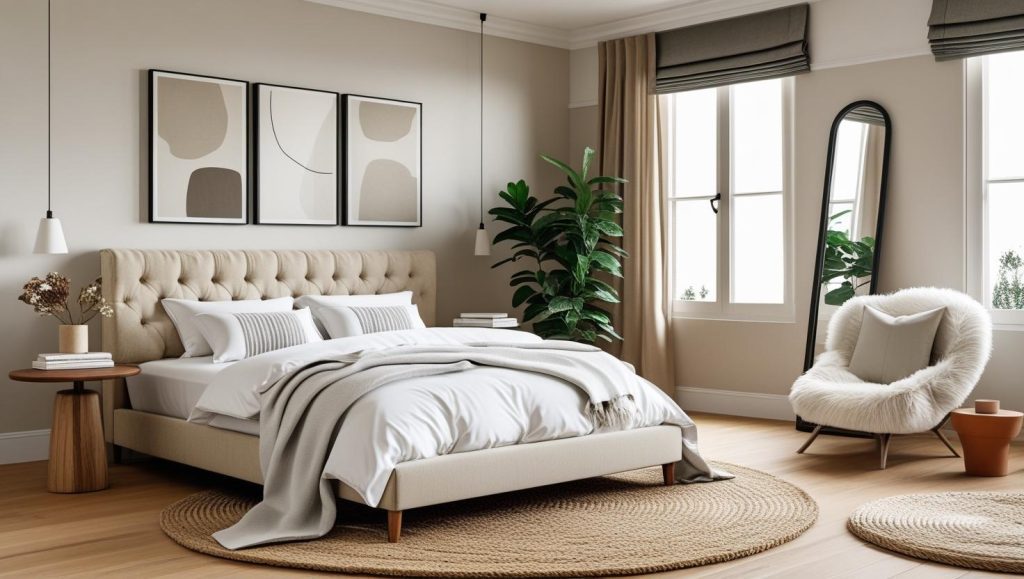
Shoe Collection Storage That Keeps Footwear Organised
I’ll admit it – I’m a bit of a shoe hoarder. Not in a scary way, but I definitely own more pairs than any reasonable person should. My old flat had this tiny hallway where shoes would pile up like some footwear graveyard, and finding a matching pair in the morning was like playing the world’s most frustrating treasure hunt. The Ottoman bed has basically saved my sanity and my relationship (my partner was getting properly fed up with the shoe chaos).
Accommodating Multiple Pairs Without Dedicated Shoe Racks or Closets
• Vertical storage maximises capacity – I can fit about 20 pairs of shoes in my ottoman bed by storing them vertically along the edges. Think of it like a library – shoes standing upright like books on a shelf. My size 7 feet mean I can get away with this, but even larger sizes work if you’re strategic about placement. Way more efficient than those over-the-door shoe organisers that hold about six pairs if you’re lucky.
• Seasonal shoes get prime real estate – Current season shoes live at the front edge, where I can grab them easily. Winter boots during cold months, sandals during summer. The out-of-season stuff gets relegated to the back corners. Sounds obvious, but you’d be amazed how long it took me to figure this out instead of just shoving everything in randomly.
• Different storage zones for different purposes – I’ve created little neighbourhoods in my shoe storage. Work shoes in one corner, casual trainers along one side, going-out shoes in another spot. Makes getting dressed so much easier when you know exactly where to look for the type of shoe you need.
Protecting Expensive Footwear From Dust, Moisture, and Damage
• Individual shoe bags are worth the investment – I use breathable cotton shoe bags for my nicer pairs. Sounds a bit precious, but when you’ve spent £200 on a pair of boots, protecting them makes financial sense. The bags prevent scuffing when shoes knock against each other and keep dust off the leather. Plus, they make everything look more organised.
• Silica gel packets in each shoe – Chuck a small silica gel packet inside each shoe to absorb moisture. Prevents that horrible musty smell that develops when shoes are stored for months. I save the packets from new shoe boxes and vitamin bottles – free moisture control that actually works.
• Tissue paper maintains shoe shape – Stuff tissue paper or old newspaper into boots and structured shoes to help them keep their shape during storage. My leather ankle boots used to come out looking like sad, deflated balloons after a few months in storage. Now they emerge looking exactly as they went in.
Seasonal Shoe Rotation Systems for Year-Round Organisation
• Twice-yearly shoe swap ritual – End of March and end of September, I do a complete shoe rotation. Summer shoes come forward, winter boots go to the back. Takes about 30 minutes and saves me from digging through Wellington boots in July looking for my sandals. I actually put it in my phone calendar now because I kept forgetting.
• Transition shoes stay accessible year-round – Some shoes work across seasons – my black ankle boots, white trainers, basic flats. These live in the most accessible spots regardless of the season. British weather is so unpredictable that you need some versatile options always within reach.
• Weather-dependent quick access – I keep one pair of waterproof shoes easily accessible at all times. Nothing worse than a sudden downpour when your only available shoes are suede. My trusty waterproof boots live right at the front corner, ready for emergency deployment.
Space Allocation Strategies for Different Shoe Types and Sizes
• Boots get the tall sections – Knee-high boots and wellington boots need the full height of the storage space, so they go along the sides where there’s maximum clearance. Ankle boots can fit pretty much anywhere, but I group them to make selection easier in the morning rush.
• Flat shoes stack beautifully – Ballet flats, loafers, and other low-profile shoes can be stacked in pairs to save space. I put a thin piece of cardboard between each pair to prevent scuffing. This technique doubles the capacity for flat shoes compared to storing them side by side.
• Trainer organisation by frequency of use – My everyday trainers live at the very front for easy grabbing. The fancy ones I only wear occasionally go further back. The ancient pair I use for gardening lives at the very back corner because let’s be honest, I only need them about twice a year.
Quick Morning Access Without Disrupting Bedroom Aesthetics
• Strategic placement for daily shoes – My most-worn shoes live right at the lifting edge of the bed. I can grab them without even fully opening the storage area. Sounds lazy, but when you’re running late for work, every second counts. Plus, it means I’m not leaving the bed open and disrupting the bedroom’s appearance.
• Clear storage boxes for visibility – I use transparent plastic boxes for shoes I wear regularly but not daily. Can see exactly what’s inside without opening every box. Game-changer for those “I know I have the perfect shoes for this outfit somewhere” moments.
• Emergency backup system – Keep one pair of versatile shoes (black flats or neutral trainers) in your regular wardrobe as backup. For those mornings when you can’t face opening the ottoman storage or when you’re genuinely running too late to make decisions about footwear.
• Bedroom aesthetics stay intact – The beauty of ottoman shoe storage is that your bedroom doesn’t look like a shoe shop exploded. No racks cluttering up the space, no shoes lined up along the walls. Everything’s hidden away, but still organised and accessible. Guests have no idea I own approximately 40 pairs of shoes.
The psychological impact of having organised shoe storage is massive. No more morning stress about finding matching shoes, no more guilt about the chaos in the hallway. Everything has its place, and I actually know what shoes I own instead of constantly buying similar pairs because I’d forgotten about the ones buried in storage. It’s turned getting dressed from a daily frustration into something that actually works smoothly. Ready to end the daily treasure hunt for matching shoes? Check out the Lunar Ottoman Bed Frame and discover how vertical shoe storage can accommodate your entire collection while keeping your bedroom looking pristine.
Out-of-Season Sports Equipment and Hobby Gear Storage
Right, this is where things get properly interesting. I’m one of those people who gets obsessed with hobbies for six months, buys all the gear, then moves on to something else. My garage used to look like a sports shop had exploded – skis next to a guitar case, camping gear mixed up with art supplies, and everything slowly deteriorating in the damp. The Ottoman bed has become my secret weapon for keeping expensive hobby gear in decent nick without turning my house into a storage unit.
Storing Skiing Equipment, Camping Gear, and Seasonal Sports Items
• Ski equipment fits surprisingly well when organised properly – My skis lie flat along one edge of the storage area, with boots and poles nestled alongside. The key is removing the bindings if possible – it saves about 5cm of height and prevents scratching other stored items. Ski boots are brilliant for storing smaller items inside them – goggles, gloves, hand warmers all fit perfectly inside the boot shell.
• Camping gear compression is essential – Sleeping bags compress down to almost nothing with proper compression sacks. My four-season sleeping bag goes from the size of a small suitcase to about the size of a football. The same principle works for camping pillows and lightweight tents. The bulky stuff like camping chairs and coolers obviously won’t fit, but all the soft goods work brilliantly.
• Tennis rackets and sports equipment protection – I keep my tennis rackets in their covers and store them flat to prevent warping. Cricket bats, hockey sticks, and similar long equipment can lie flat along the length of the storage area. Just make sure nothing heavy is stacked on top – learned that lesson when my cricket bat came out with a lovely dent from a box of art supplies.
Protecting Valuable Equipment From Environmental Damage
• Temperature stability prevents equipment degradation – The bedroom environment is so much better than a garage or shed for expensive gear. My guitar doesn’t go out of tune from temperature changes, and the electronics in my camera equipment don’t get condensation damage. Consistent temperature means my ski bindings aren’t seizing up from moisture, and my camping stove still works properly after months in storage.
• Moisture control saves expensive equipment – I use those big silica gel packets (the ones that come with electronics) throughout the storage area. My camera lenses used to get fungus spots when stored in the garage – it hasn’t happened once since moving everything to the ottoman bed. The sealed environment keeps humidity stable, which is crucial for anything with metal components.
• Protection from dust and debris – Everything stays clean in the enclosed storage. My camping gear used to come out covered in garage dust and spider webs. Now it emerges ready to use without needing a full clean first. Saves time and means I’m more likely to actually use the equipment instead of putting off trips because of the faff involved in cleaning everything.
Organising Hobby Supplies and Creative Equipment
• Art supplies in clear, stackable containers – I use those transparent plastic boxes with tight-fitting lids for all my art materials. Paints, brushes, sketchbooks – everything visible and organised. The containers stack beautifully, and I can see exactly what I’ve got without opening every box. Much better than the old system of random carrier bags and cardboard boxes.
• Musical instrument storage requires special care – My acoustic guitar lives in a hard case inside the ottoman storage during the winter months when the heating dries out the air. The stable temperature and humidity prevent the wood from cracking. Smaller instruments like my ukulele and harmonica collection fit in padded bags alongside other gear.
• Craft supplies organisation by project type – I’ve got separate containers for different hobbies – one for knitting supplies, another for woodworking bits, and one for electronics components. Sounds obsessive, but when inspiration strikes for a particular project, I can grab the relevant box without unpacking everything else.
Weight Distribution Tips for Heavy Equipment Storage
• Heavy items around the perimeter – Learned this through trial and error when my gas struts started struggling. Heavy stuff like camera equipment, power tools, and camping stoves goes around the edges where the bed frame provides most support. Lighter items like sleeping bags and clothing fill the middle section.
• Even distribution prevents sagging – Don’t pile all your heavy gear in one corner – the bed base will start to sag and the lifting mechanism gets strained. I spread my camera equipment across one side, camping gear along another edge. The weight distribution feels much more balanced when opening and closing the bed.
• Consider the lifting mechanism’s limits – Most ottoman beds handle about 25-30kg of storage weight comfortably. That’s roughly equivalent to a full camping setup or a decent camera kit with lenses. I weigh my storage boxes occasionally to make sure I’m not overloading the system – sounds nerdy, but replacing gas struts is expensive and annoying.
Easy Retrieval Systems for Frequently Used Items
• Seasonal accessibility planning – Items I’ll need soon live near the lifting edge. Summer camping gear moves forward in spring, and winter sports equipment gets priority placement in autumn. Takes a bit of planning, but saves massive amounts of digging around when you actually want to use something.
• Quick-grab emergency kit – I keep a small container with frequently needed items right at the front – spare camera batteries, basic camping essentials, emergency art supplies for when creativity strikes. Means I don’t have to open the entire storage area for small items.
• Inventory list prevents forgotten purchases – I keep a simple list on my phone of what’s stored in the ottoman bed. Prevents me from buying duplicate equipment because I’d forgotten I already owned something. Has saved me from purchasing three camping stoves and two sets of watercolour paints.
• Modular storage system – Everything goes in containers that I can lift out individually. When I want my photography gear, I can grab just that box without disturbing the camping equipment. Much more civilised than the old system of everything loose and tangled together.
The brilliant thing about using ottoman bed storage for hobby gear is that everything stays in good condition and ready to use. No more discovering that your camping stove has rusted, or your art supplies have gone mouldy. Equipment that’s properly stored gets used more often because there’s no barrier to cleaning and checking everything before each use. It’s turned my hobby gear from a source of guilt (expensive stuff gathering dust) into something that actually enhances my life because it’s accessible and well-maintained. Protect your valuable hobby gear from garage dampness and temperature fluctuations! View the Isla Upholstered Ottoman Bed Frame and create the perfect climate-controlled storage environment for all your seasonal sports equipment.
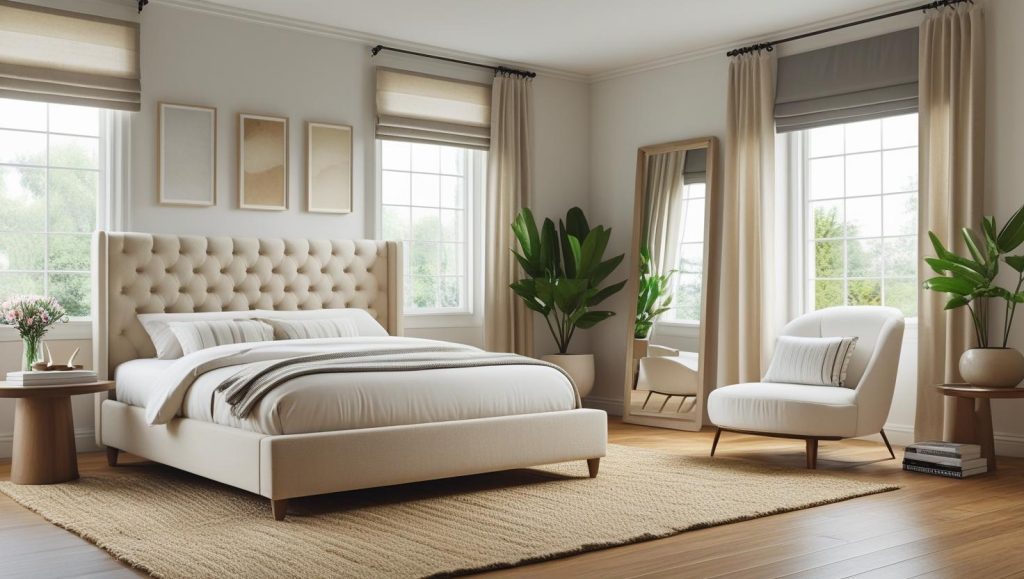
Emergency Preparedness and Rarely Used Items Organisation
I’ll be honest – I used to be one of those people who thought emergency preparedness was a bit over the top. Then we had that massive power cut a few years back that lasted three days, and I found myself eating cold beans by candlelight while my phone died and I had no idea where anything useful was stored. That was my wake-up call. Now I’ve got a proper emergency setup in my ottoman bed, and it’s given me this weird sense of security that I never knew I was missing.
Creating Accessible Emergency Supply Storage Within the Bedroom
• Strategic placement for middle-of-the-night access – Emergency supplies live right at the front corner of my ottoman storage, where I can reach them even in complete darkness. Sounds dramatic, but when the power goes out at 2 a.m., you don’t want to be fumbling around trying to remember where you put the torch. I can literally roll out of bed and grab what I need within seconds.
• Waterproof containers are non-negotiable – Everything emergency-related goes in sealed, waterproof boxes. I learned this lesson when a radiator leak in the flat upstairs soaked through my bedroom ceiling. My emergency supplies stayed bone dry while everything else got drenched. Those plastic storage boxes with rubber seals are worth every penny.
• Multi-purpose emergency kit organisation – I’ve got one main emergency box that covers power cuts, minor injuries, and basic survival needs. Torch, batteries, first aid supplies, emergency radio, water purification tablets, energy bars. It’s like a Swiss Army knife approach to emergency prep – covers most scenarios without taking up massive amounts of space.
Storing Important Documents and Backup Electronics
• Document protection system – All important paperwork goes in a fireproof document bag inside a waterproof container. Passport, insurance documents, property deeds, birth certificate – basically anything that would be a nightmare to replace. I scan everything and keep digital copies on a USB stick in the same container, paranoid, maybe, but losing important documents is genuinely stressful.
• Electronics backup strategy – I keep an old smartphone, portable charger, and emergency radio in the storage. The phone’s loaded with offline maps, emergency contact numbers, and useful apps that work without internet. The portable charger gets rotated every few months to keep the battery fresh. Amazing how dependent we are on electronics until they stop working.
• Cash emergency fund – Small amount of cash in various denominations stored in a sealed envelope. When card machines go down or there’s no power, cash becomes king. I keep about £200 in mixed notes – enough for a few days of essentials but not so much that I’m worried about security.
Organising Rarely Used Items and Special Occasion Storage
• Holiday decoration rotation system – Christmas decorations, Halloween bits, Easter stuff – all the seasonal gubbins that clutters up your life for 11 months of the year. I use clear storage boxes labelled by holiday, stacked in the back section of the ottoman storage. Each box contains everything needed for that particular celebration, so I’m not hunting through multiple containers.
• Special occasion clothing preservation – My wedding outfit, formal evening wear, fancy dress costumes – all the clothes that cost a fortune but get worn once a year if I’m lucky. Everything goes in garment bags with lavender sachets to keep moths away. The sealed storage environment keeps everything fresh and ready for when I actually need to look respectable.
• Sentimental item protection – Photo albums, letters, small keepsakes that would be irreplaceable if lost. These live in acid-free boxes with silica gel packets to prevent deterioration. Not exactly emergency supplies, but they’re the sort of things you’d grab in a fire, so having them easily accessible makes sense.
Maintaining Inventory Systems for Emergency Supplies
• Expiry date tracking system – I keep a simple spreadsheet on my phone with expiry dates for all emergency food, batteries, and medical supplies. Set reminders to check everything every six months. Sounds obsessive, but there’s no point having emergency supplies if half of them are past their use-by date when you actually need them.
• Rotation schedule for perishables – Energy bars, water purification tablets, batteries – anything with a shelf life gets rotated regularly. I use the “first in, first out” principle like a proper shop. New supplies go to the back, and older items move forward for use. Prevents waste and ensures everything’s fresh when needed.
• Regular inventory checks – Every few months, I do a complete inventory of what’s stored. Takes about 20 minutes and helps me spot anything that’s missing or needs replacing. Also reminds me what I’ve actually got stored, which is surprisingly easy to forget when everything’s tucked away out of sight.
Balancing Accessibility With Long-Term Storage Needs
• Layered access system – Most frequently needed items at the front, rarely used stuff at the back. Emergency supplies get priority placement because when you need them, you really need them quickly. Holiday decorations can wait at the back because I’ve usually got weeks of notice before needing them.
• Climate-controlled environment benefits – The bedroom’s stable temperature and humidity are perfect for long-term storage of sensitive items. Documents don’t get damp, electronics don’t suffer from temperature fluctuations, and fabrics don’t develop that musty storage smell. Much better than keeping everything in the garage or loft.
• Security considerations – Important documents and emergency cash are stored in the bedroom, where they’re more secure than in a shed or garage. The Ottoman bed isn’t obvious storage, so it’s less likely to be targeted by opportunistic thieves. Plus, I’m more likely to hear if someone’s trying to break into my bedroom storage.
• Psychological benefits of preparedness – Having emergency supplies organised and accessible has genuinely reduced my anxiety levels. I sleep better knowing that if something goes wrong, I’ve got the basics covered. It’s not about being paranoid – it’s about being sensible and taking control of what you can control.
The beauty of using ottoman bed storage for emergency prep is that everything’s there when you need it, but hidden away so it doesn’t dominate your living space. No massive emergency kit taking up cupboard space, no important documents scattered across different locations. Everything’s organised, protected, and accessible from the comfort of your bedroom. It’s turned emergency preparedness from something that felt overwhelming into a manageable system that actually works. Take control of your emergency preparedness with accessible bedroom storage! Discover the Saros Ottoman Bed Frame and create a secure, organised system for all your emergency supplies and important documents.
Small Apartment Living Solutions for Maximum Space Efficiency
Living in a tiny flat has taught me that every piece of furniture needs to earn its keep. I’ve moved house six times in the last decade, each place smaller than the last, and I’ve become a bit obsessed with making spaces work harder. My current one-bedroom flat is about 45 square metres, and the ottoman bed has been an absolute game-changer. It’s like having a secret storage room that nobody knows exists.
Replacing Multiple Furniture Pieces With One Multifunctional Bed
• Goodbye to bedroom furniture clutter – Before the ottoman bed, my bedroom had a bed, two bedside tables, a chest of drawers, and one of those horrible under-bed storage boxes on wheels. Now it’s just the bed and two small side tables. The visual difference is massive – the room actually looks like a bedroom instead of a furniture warehouse.
• One purchase replaces five separate items – I worked it out once – the ottoman bed replaced my old bed frame, a chest of drawers, two storage ottomans, and those plastic under-bed boxes. Instead of five separate pieces taking up floor space and looking messy, everything’s contained in one sleek unit. My bedroom went from chaotic to calm overnight.
• Multifunctional design maximises utility – It’s not just storage and sleeping – the bed base doubles as seating when I’ve got friends over. Sounds weird, but in a tiny flat, every surface needs multiple purposes. I can sit on the edge to put on, use it as a makeshift desk surface, or even as extra seating when I’m having people round for dinner.
Eliminating Separate Storage Units and Furniture
• No more bulky dressers taking up wall space – My old chest of drawers was this massive thing that dominated one wall and made the room feel cramped. Now all my clothes storage is hidden under the bed, and I’ve got that entire wall free for other things. I put up some floating shelves instead – much more elegant and takes up zero floor space.
• Under-bed storage boxes are properly redundant – Those plastic storage boxes that slide under normal beds are rubbish anyway – always getting stuck, collecting dust, impossible to organise properly. The ottoman storage is like having a proper wardrobe under your bed instead of a collection of random boxes that never quite fit properly.
• Wardrobe space can be repurposed – With so much storage under the bed, I don’t need my wardrobe for everything. Now it’s just for hanging clothes and shoes I wear regularly. The extra space means everything’s less cramped, and I can actually see what I own instead of everything being squashed together.
Creating Clean Minimalist Aesthetics While Maintaining Functionality
• Hidden storage maintains visual calm – The beauty of ottoman bed storage is that it’s completely invisible. My bedroom looks minimal and uncluttered, but I’ve actually got more storage than ever before. Guests have no idea I’m storing half my worldly possessions under the bed – they just see a clean, organised space.
• Reduced visual noise improves mental well-being – I never realised how much the clutter was affecting my mood until it was gone. Having all that storage hidden away makes the bedroom feel like a proper sanctuary instead of a dumping ground. I sleep better in a tidy space, and getting dressed is less stressful when everything has its place.
• Streamlined design choices – With less furniture cluttering the room, I could invest in better quality pieces for what remains. My bedside tables are actually nice now, instead of cheap things chosen purely for storage capacity. The room feels more grown-up and intentional rather than just functional.
Maximising Floor Space for Better Room Flow
• Walking space transforms room usability – I can actually walk around my bed now instead of doing that sideways shuffle between furniture. Sounds trivial, but it makes the room feel twice as big. I can do yoga beside the bed, have space to get dressed properly, and the room just flows better.
• Optical illusion of larger space – Less furniture on the floor makes the room appear much bigger than it actually is. The eye isn’t constantly hitting obstacles, so the space feels more open and airy. My mum visited and genuinely asked if I’d knocked through a wall because the room seemed so much larger.
• Flexible room layout options – With minimal furniture, I can actually rearrange things when I fancy a change. Before, everything was crammed in so tightly that moving anything meant moving everything. Now I’ve got options, which is luxury in a small space.
Cost-Effective Storage Solutions Compared to Additional Furniture
• One purchase versus multiple expensive items – A decent ottoman bed costs about the same as a good chest of drawers plus under-bed storage solutions. But you’re getting so much more functionality for your money. I worked out that buying equivalent storage furniture separately would have cost about £800 more than the ottoman bed.
• No need for professional storage solutions – I was seriously considering one of those expensive fitted bedroom storage systems before I discovered ottoman beds. It would have cost thousands and taken up loads of space. The Ottoman bed gave me better storage capacity for a fraction of the price.
• Reduced moving costs – This might sound daft, but having less furniture makes moving house so much cheaper and easier. One bed instead of five pieces of bedroom furniture means a smaller removal van, fewer trips, and less hassle. In London, where I seem to move every couple of years, this actually adds up to significant savings.
• Investment in quality over quantity – Instead of buying loads of cheap storage furniture that falls apart, I could invest in one really good ottoman bed that does everything. Better for the environment, better for my wallet long-term, and much better for my sanity.
The psychological impact of living in a properly organised small space is massive. Instead of feeling cramped and chaotic, my flat feels intentional and calm. The Ottoman bed has been central to this transformation – it’s given me all the storage I need without sacrificing the clean, uncluttered aesthetic that makes small spaces livable. I actually enjoy being at home now instead of feeling overwhelmed by stuff everywhere.
Living in a small space doesn’t mean compromising on storage or style. It just means being smarter about furniture choices and making every piece work harder. The Ottoman bed has proved that you can have your cake and eat it too – maximum storage capacity with minimum visual impact. Transform your tiny space into a clutter-free haven with multifunctional furniture! Explore our complete range of space-saving ottoman beds and discover how one smart purchase can replace five separate pieces of furniture.
Conclusion
Upholstered ottoman beds represent the perfect marriage of style, comfort, and practicality for modern living spaces. From seasonal clothing rotation to emergency preparedness, these versatile furniture pieces solve storage challenges that plague homeowners and renters alike. By implementing even a few of these storage strategies, you’ll transform your bedroom from a cluttered space into an organised sanctuary where everything has its place.
Ready to reclaim your bedroom and maximise your storage potential? Consider investing in an upholstered ottoman bed – your future organised self will thank you for making such a smart, space-saving decision! Your organised bedroom transformation starts with one smart decision. Browse our full collection of upholstered ottoman beds and choose the perfect storage solution that will serve you for years to come. Your future organised self is waiting!
Frequently Asked Questions
1. How much storage space does an upholstered ottoman bed actually provide?
An upholstered ottoman bed typically provides 35-40cm of full-height storage space across the entire bed base area. For a king-size ottoman bed, this translates to approximately 2.8 cubic metres of accessible storage capacity – equivalent to a large wardrobe’s worth of space.
The actual storage capacity depends on several factors:
- Bed size dimensions – King-size beds offer roughly 1.4m x 2m of storage area
- Storage compartment height – Most ottoman beds provide 35-40cm clearance
- Gas strut mechanism space – Hydraulic lifting systems require minimal overhead room
- Bed frame construction – Upholstered ottoman beds maximise every inch of base area
This hidden storage compartment can accommodate seasonal clothing, bedding sets, shoes, sports equipment, and emergency supplies while maintaining bedroom aesthetics.
2. What weight capacity should I expect from ottoman bed storage?
Ottoman bed storage typically supports 20-30kg of stored items in addition to the mattress weight. Most hydraulic lifting mechanisms and gas struts are engineered to handle this capacity while maintaining smooth, effortless operation for daily access.
Weight distribution guidelines include:
- Distribute heavy items around the perimeter where the bed frame support is strongest
- Place lighter items in the centre to prevent base sagging
- Avoid concentrated weight in single corners or areas
- Consider bulky but lightweight items like duvets, pillows, and seasonal clothing
- Check manufacturer specifications for your specific ottoman bed model
Exceeding weight limits can strain gas struts, cause lifting mechanism failure, and potentially damage the bed frame structure.
3. How do I maintain fabric quality when storing items in an ottoman bed?
Maintaining fabric quality in Ottoman bed storage requires proper preparation and climate control measures. The enclosed storage environment naturally protects items from dust, pet hair, and temperature fluctuations that can damage delicate fabrics.
Essential fabric protection steps:
- Use breathable cotton storage bags instead of plastic containers
- Add cedar blocks or lavender sachets to prevent moth damage
- Include silica gel packets to control moisture and humidity
- Rotate stored items every 3-6 months to prevent permanent creases
- Clean items before storage to prevent stains from setting
- Avoid vacuum-sealing natural fibres like down, wool, or leather
The stable bedroom temperature and sealed storage compartment create ideal conditions for preserving clothing, bedding, and seasonal accessories.
4. Can Ottoman beds accommodate seasonal clothing rotation effectively?
Ottoman beds excel at seasonal clothing rotation by providing dedicated storage zones for different wardrobe categories. The large storage compartment allows you to store entire seasonal wardrobes while keeping current-season items easily accessible in your regular wardrobe.
Effective seasonal rotation strategies:
- Create designated storage zones for summer and winter clothing
- Use clear storage containers for easy identification and organisation
- Label everything specifically – “Winter coats,” “Summer dresses,” “Beach accessories”
- Schedule bi-annual swaps in March and September
- Keep transition pieces accessible for unpredictable British weather
- Store bulky items flat to maximise space efficiency
This system eliminates wardrobe overcrowding and makes seasonal transitions seamless and stress-free.
5. Are upholstered ottoman beds suitable for small bedrooms and apartments?
Upholstered ottoman beds are ideal for small bedrooms and studio apartments because they replace multiple furniture pieces with one multifunctional solution. A single ottoman bed can eliminate the need for separate storage units, dressers, under-bed boxes, and additional bedroom furniture.
Space-saving benefits for small rooms:
- Maximise floor space by reducing furniture clutter
- Create clean, minimalist aesthetics while maintaining storage functionality
- Replace 4-5 separate storage pieces with one elegant bed frame
- Provide hidden storage that doesn’t compromise visual space
- Offer versatile storage options for clothing, bedding, shoes, and personal items
- Maintain easy access without disrupting bedroom flow or design
This makes Ottoman beds perfect for modern apartment living, where every square metre counts.