
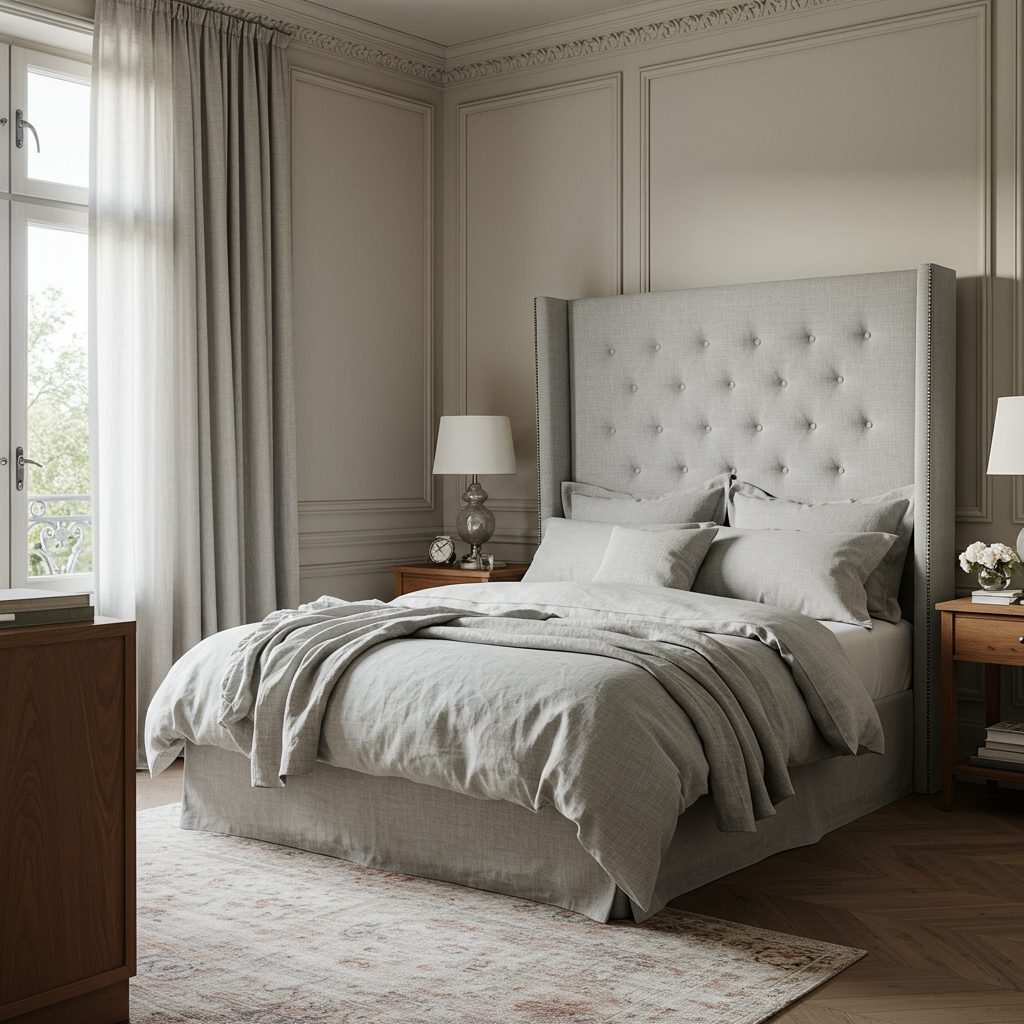
Best Double Bed Storage Ideas for Small Bedrooms: 25 Space-Saving Solutions for 2025
Did you know that the average bedroom has decreased in size by 15% over the past decade, yet we own 50% more belongings than previous generations? If you’re struggling to fit everything into your small bedroom while maintaining a comfortable double bed, you’re not alone! The good news is that with the right storage strategies, even the tiniest bedroom can become a perfectly organised retreat.
I’ve spent years helping homeowners maximise their bedroom storage, and today I’m sharing the most effective double bed storage solutions that will transform your cramped quarters into a spacious-feeling sanctuary. These aren’t just storage hacks – they’re game-changing ideas that will revolutionise how you think about small bedroom organisation! Ready to transform your cramped bedroom into a spacious sanctuary? Start with our premium Ottoman Bed Collection – the ultimate space-saving solution that combines comfort with massive storage capacity!
Under-Bed Storage Solutions That Maximise Every Inch
Rolling Storage Bins and Containers for Seasonal Items
• Invest in quality wheeled containers, not cheap plastic rubbish. I learned this the hard way when my first set cracked after three months of use. Proper rolling bins with sturdy wheels make accessing your stored items dead easy – no more crawling around on your hands and knees trying to drag heavy boxes out.
• Measure your bed height before buying anything. Most standard double beds sit about 20-25cm off the ground, so look for containers under 18cm tall. I once bought gorgeous wicker baskets that were 2cm too tall – proper gutting when you realise they won’t fit!
• Use clear containers for seasonal clothes and decorations. Being able to see what’s inside saves you from opening every single box when you’re hunting for your winter jumpers. I label mine with masking tape too – “Summer clothes,” “Christmas decs,” that sort of thing.
Built-in Drawers Integrated into Bed Frames
• Look for beds with deep, full-extension drawers. The shallow ones are basically useless for anything bigger than socks. My bed has two massive drawers that can each hold about 20 t-shirts or three complete sets of bedding – it’s like having a chest of drawers that doesn’t nick any floor space.
• Check the drawer mechanisms before buying. Some cheaper beds have drawers that stick or don’t slide smoothly. You want ones with proper runners that glide out easily, even when they’re packed full.
• Consider beds with drawers on both sides. If your room layout allows it, having storage on both sides doubles your capacity. Just make sure you’ve got enough space to actually open them!
Vacuum-Sealed Bags for Bulky Bedding and Clothes
• These bags are absolute magic for space saving. Last winter, I managed to compress four thick duvets and six chunky jumpers into just two bags that slid perfectly under my bed. We’re talking about reducing bulk by up to 75% – it’s mental how much space you save.
• Make sure you’ve got a decent vacuum cleaner. Some bags are properly stubborn to compress, and a weak hoover just won’t cut it. I use the hose attachment and really go to town on getting all the air out.
• Don’t store everything vacuum-sealed long-term. Down-filled items can lose their loft if compressed for ages. I rotate my vacuum bags every six months or so to keep things in good nick.
Sliding Storage Boxes for Easy Access
• Perfect for items you need regularly but want hidden away. I use mine for extra pillows, throws, and spare bedding – stuff that’s bulky but gets used fairly often. The sliding mechanism means you can grab what you need without disturbing everything else.
• Look for boxes with smooth-running tracks. Cheap ones stick halfway out, which is infuriating when you’re trying to access your stuff quickly. Spend a bit more for quality runners that glide properly.
• Consider modular systems that can be expanded. Some brands make sliding boxes that connect together, so you can add more storage as your needs change.
Platform Bed Designs with Hidden Compartments
• These are the ultimate solution if you’re willing to invest. My mate Sarah has one where the entire mattress lifts up on gas struts – it’s like opening a massive treasure chest. She stores everything from out-of-season clothes to spare bedding in there.
• Gas strut mechanisms are worth the extra cost. They make lifting the mattress dead easy, even when it’s heavy. Without them, you’d need two people to access your storage, which defeats the point, really.
• Measure your ceiling height first. When the bed lifts up, you need clearance above. Sarah’s bedroom has high ceilings, but in a standard room, you might struggle with space when the bed’s open. Stop crawling around looking for your stuff! Get the Lizzy Ottoman Upholstered Bed Frame with effortless rolling storage access and premium build quality that won’t let you down.
Smart Headboard Storage Ideas for Double Beds
Floating Shelves Above the Headboard
• Start with one shelf and build up gradually. I made the mistake of installing three shelves at once without testing the look first – ended up looking like a library exploded above my bed. One well-placed shelf about 30cm above your headboard is usually perfect for books, a small plant, or decorative bits.
• Use proper wall anchors, not just screws into plasterboard. Learned this lesson when my shelf came crashing down at 2 am with all my books on it. Scared the life out of me! Heavy-duty wall plugs or finding the studs is essential, especially if you’re storing anything weighty.
• Keep items lightweight and secure. Nothing worse than getting bonked on the head by a falling picture frame in the middle of the night. I stick to books, small plants, and lightweight decorative pieces. Anything breakable gets a bit of museum wax underneath to keep it put.
Built-in Cubby Storage Within the Headboard Design
• Custom-built cubbies are brilliant but pricey. I had mine made by a local carpenter for about £400, but it’s been worth every penny. Each cubby holds different things – one for books, one for my phone charger, and another for reading glasses. It’s like having a bedside table that doesn’t take up floor space.
• Plan your cubby sizes based on what you actually use. Don’t just make them all the same size because it looks neat. I made one cubby specifically for my Kindle and charging cable, another deeper one for paperback books. Think about your bedtime routine and what you reach for most often.
• Consider adding small LED strip lights inside. Game changer for late-night reading! I installed battery-powered LED strips in two of my cubbies, and now I can find my book or phone without waking my partner with the main light.
Nightstand Alternatives Attached to the Headboard
• Wall-mounted floating nightstands save loads of floor space. I ditched my bulky bedside tables for two floating shelves with small drawers attached to my headboard wall. Suddenly, my bedroom felt twice as big, and I could actually hoover under the bed properly.
• Make sure they’re at the right height for your mattress. This sounds obvious, but when I first installed mine, they were too high because I didn’t account for my thick mattress topper. You want the surface to be roughly level with your mattress top for easy reaching.
• Include a small drawer or hidden compartment. Even a tiny drawer is brilliant for hiding away charging cables, lip balm, or other bedside essentials. Keeps the surface looking tidy whilst still having everything within arm’s reach.
Hidden Compartments Behind Upholstered Headboards
• This is proper secret agent stuff, and I love it! My upholstered headboard has a hidden panel that opens to reveal storage for important documents, spare cash, and other valuables. Guests never suspect there’s storage back there because it just looks like a normal padded headboard.
• Use magnetic catches for silent opening. Regular hinges can be noisy, which defeats the point of hidden storage. Magnetic catches keep things secure but open silently – perfect for accessing things without disturbing a sleeping partner.
• Keep moisture-sensitive items in sealed bags. The space behind headboards can get a bit damp, especially on external walls. I learned this when some old photos got a bit mouldy. Now everything goes in ziplock bags or small plastic containers.
Bookshelf Headboards for Avid Readers
• These are absolutely brilliant if you’re a proper bookworm. My bookshelf headboard holds about 60 paperbacks and looks dead smart too. It’s like having a mini library right behind your head – perfect for grabbing a different book if the current one’s not doing it for you.
• Secure books with a small lip or rail. Nothing worse than books falling on your head whilst you’re sleeping! I added a 2cm wooden lip along the front of each shelf. Keeps everything in place but still looks neat and doesn’t interfere with getting books out.
• Consider the weight on your wall. Books are heavier than you think, especially when you’ve got loads of them. I had to use heavy-duty wall anchors and spread the weight across multiple fixing points. My headboard is attached at six points along the wall to distribute the load properly.
• Leave some empty space for new additions. Don’t pack every shelf completely full from day one. I keep about 20% of each shelf empty so I can add new books without having to reorganise everything. Makes the whole system much more practical for daily use. Looking for more headboard storage inspiration? Check out our guide on Ottoman Beds with Headboard Options to discover design combinations that maximise both style and storage!
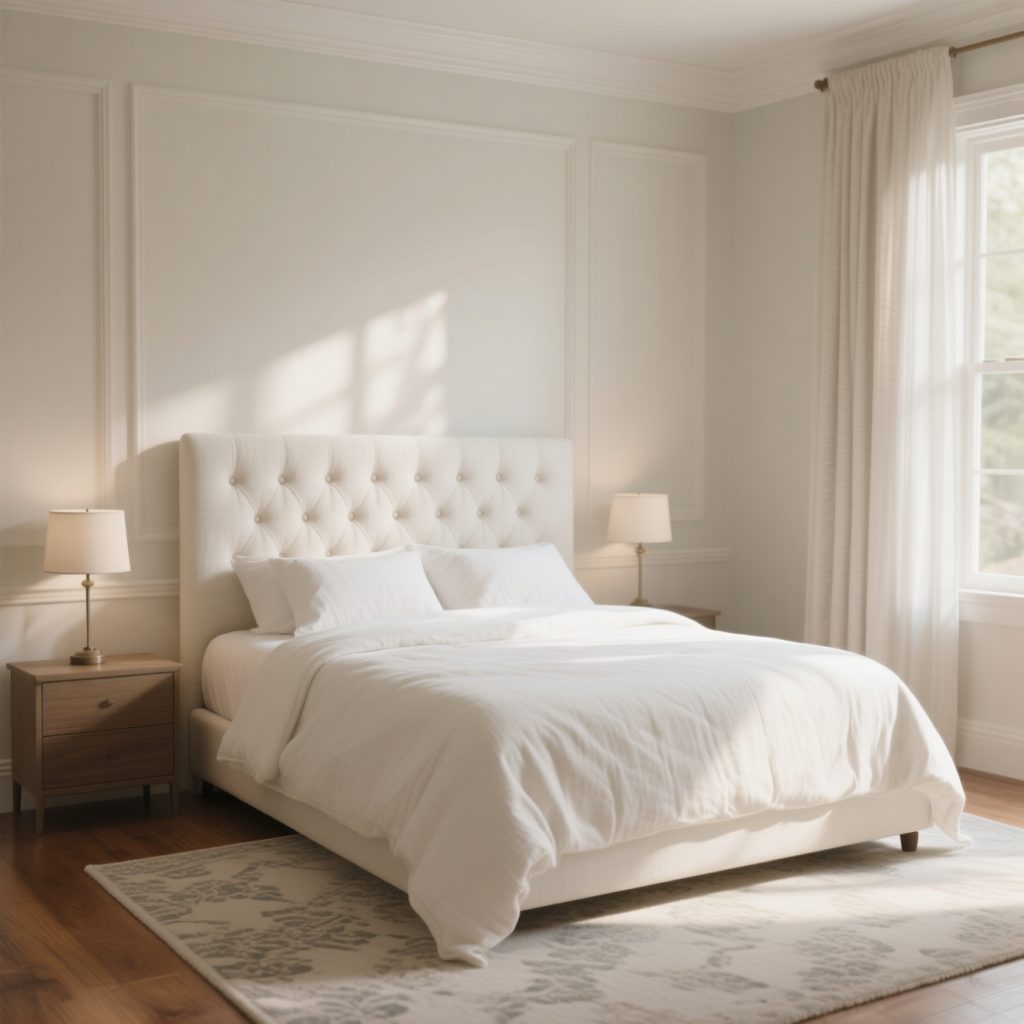
Vertical Storage Solutions to Maximise Wall Space
Floor-to-Ceiling Wardrobes and Armoires
• Go all the way to the ceiling, even if it looks massive at first. I was properly nervous about installing a floor-to-ceiling wardrobe because I thought it’d make my small bedroom feel like a cupboard. Turns out, it actually makes the room look taller! The key is choosing doors that match your wall colour or going for mirrored ones to bounce light around.
• Use the top section for seasonal storage, not daily items. That space above head height is brilliant for Christmas decorations, summer clothes in winter, or spare bedding. I keep a small step ladder in my wardrobe specifically for accessing the top shelves – much safer than balancing on a wobbly chair like I used to do.
• Consider sliding doors if you’re tight on space. Hinged doors need clearance to open, which can be a nightmare in small bedrooms. My sliding door wardrobe only needs about 10cm of space in front of it, compared to the 60cm my old hinged one required. Proper game changer for room layout.
Wall-Mounted Shelving Systems
• Modular systems are worth the extra cost for flexibility. I started with just two shelves from IKEA’s ALGOT system and gradually added more brackets and shelves as my storage needs changed. Now I’ve got a whole wall of adjustable storage that I can reconfigure whenever I fancy a change.
• Space shelves based on what you’re actually storing. Don’t just put them at regular intervals because it looks neat. I’ve got one gap that’s perfect for folded jumpers, another that fits shoe boxes exactly, and a taller section for hanging my dressing gown. Measure your stuff first, then plan your shelf spacing.
• Use a spirit level and mark your wall properly. Wonky shelves drive me absolutely mental, and once they’re up with stuff on them, they’re a right pain to adjust. I spent ages getting my first shelf perfectly level, then used it as a reference for all the others. Worth the extra time for a professional-looking result.
Over-Door Organisers and Hooks
• The back of your bedroom door is prime real estate that most people waste. I’ve got an over-door shoe organiser that holds way more than just shoes – phone chargers, hair accessories, small toiletries, even rolled-up belts. It’s like having an extra drawer that doesn’t take up any floor or wall space.
• Choose organisers with clear pockets so you can see what’s inside. Opaque pockets are useless because you end up rummaging through everything to find what you need. I can spot my phone charger or favourite hair tie instantly with clear pockets, which saves loads of time during busy mornings.
• Don’t overload door hooks, or the door won’t close properly. I learned this when I hung too many coats on my door hooks and couldn’t shut the door without everything falling off. Now I limit it to two lightweight items per hook – maybe a dressing gown and a light cardigan, not my entire winter coat collection.
Corner Storage Units and Towers
• Corners are dead space that most people completely ignore. I squeezed a tall corner unit into the space between my wardrobe and the wall, and it holds loads of stuff – spare towels, extra bedding, out-of-season clothes. It’s only about 30cm wide but goes right up to the ceiling, so the storage capacity is brilliant.
• Look for units with adjustable shelves for maximum flexibility. My corner tower has shelves I can move up and down depending on what I’m storing. Sometimes I need space for tall boots, other times I want more shelves for smaller items. Being able to adjust things means the unit works harder for me.
• Secure tall units to the wall for safety. Corner units can be a bit wobbly because they’re narrow and tall. I learned this when mine nearly toppled over whilst I was reaching for something on the top shelf. A couple of wall brackets at the back keep everything stable and safe.
Floating Bedside Tables to Free Floor Space
• These make small bedrooms feel so much bigger. Swapping my chunky bedside tables for floating shelves was like gaining an extra square metre of floor space. Suddenly, I could actually walk around my bed without stubbing my toe on furniture legs every morning.
• Install them at the perfect height for your bed setup. This took me three attempts to get right because I kept forgetting about my thick mattress topper. You want the surface roughly level with your mattress top so you can reach your phone or water glass easily without stretching.
• Include a small drawer or hidden storage underneath. Even a tiny drawer makes a massive difference for hiding away charging cables, lip balm, or other bedside essentials. I found one with a hidden magnetic drawer that keeps the surface looking clean whilst still having everything I need within arm’s reach.
• Consider ones with built-in charging stations. My floating bedside shelf has a small groove at the back for cable management and a hidden power strip underneath. Means I can charge my phone and Kindle without having cables trailing everywhere, which looks much tidier and is safer too. Maximising vertical space? Learn how King Size Ottoman Beds can anchor your floor-to-ceiling storage system perfectly in our comprehensive guide!
Multi-Functional Furniture for Double Bedroom Storage
Ottoman Storage Benches at the Foot of the Bed
• Perfect triple-duty solution – I picked up this brilliant ottoman from IKEA for about £89, and it’s honestly been a lifesaver. You get extra seating for putting on shoes, a dumping ground for clean laundry (we’ve all been there), and hidden storage underneath.
• Massive storage capacity – Mine holds around 150 litres, which is mental when you think about it. I’ve stuffed it with winter duvets, spare pillows, and even some out-of-season clothes. Just measure your bed height first because I nearly bought one that blocked our telly view.
• Weight considerations matter – Most decent ones can handle about 120kg of sitting weight, but don’t go mad with what you store inside. Heavy items like books can make the whole thing a nightmare to move around.
Storage Beds with Hydraulic Lift Mechanisms
• Game-changing storage space – After six months with just the ottoman, I went completely mad and invested £450 in a hydraulic lift bed. The storage underneath is absolutely ridiculous – we’re talking enough space for everything you’d normally shove in a wardrobe.
• Effortless operation – The hydraulic mechanism means you can lift the entire mattress with one finger. My mum thought it was magic when she visited. Most systems can handle around 25kg per square metre of storage weight without the mechanism failing.
• Organisation is key – Pro tip: keep a list of what’s stored under there. I once spent twenty minutes looking for my winter coat only to remember it was literally beneath me. Proper embarrassing.
Bedside Tables with Multiple Drawers
• Standard tables are useless – One tiny drawer that fits maybe a phone charger? Forget that. I upgraded to units with three deep drawers each, and suddenly we had proper storage for all those random bedroom bits that usually end up on the floor.
• Smart drawer organisation – Top drawer for daily essentials like glasses and chargers, middle for books and notebooks, bottom for seasonal stuff. The key is getting ones with full-extension drawer slides – cheap ones only open halfway and you’ll spend ages fishing around at the back.
• Size matters for functionality – Look for drawers that are at least 35cm deep. Anything shallower and you’re basically back to having useless storage that can’t fit anything properly.
Wardrobe Beds That Fold Into Wall Units
• Proper space-saving wizardry – These are mental clever, especially in compact rooms. During the day, your bed disappears completely and you’ve got your floor space back. The mechanism is surprisingly sturdy too – most can handle up to 150kg without breaking a sweat.
• Installation considerations – You’ll need proper wall fixings and ideally a stud wall. I learned this the hard way when my first attempt nearly pulled half the plasterboard down. Get a professional to fit it unless you’re properly handy with DIY.
• Daily routine adjustment – Takes about two weeks to get used to making and unmaking your bed every day, but the extra space during daytime hours is absolutely worth it.
Dresser and Desk Combination Pieces
• Perfect for home workers – I’ve got one that’s a chest of drawers on one side and a pull-out desk on the other. Saves about 60% of floor space compared to separate pieces, and everything matches perfectly.
• Functionality balance – Make sure the desk portion is actually usable – some are too shallow for proper laptop work. Mine’s 50cm deep, which is just about right for a laptop and notebook.
• Weight distribution matters – Don’t overload the drawers if you’re using the desk portion regularly. The whole unit can become wobbly if one side is significantly heavier than the other.
Multi-functional furniture isn’t just about cramming more stuff into less space – it’s about making your bedroom actually work for your lifestyle instead of constantly fighting against it. Maximising vertical space? Learn how King Size Ottoman Beds can anchor your floor-to-ceiling storage system perfectly in our comprehensive guide!
Creative DIY Storage Hacks for Small Bedrooms
Repurposing Vintage Suitcases as Under-Bed Storage
• Charity shop goldmine – I picked up three vintage suitcases from different charity shops for about £15 total. The trick is finding ones that are roughly the same height so they slide under your bed evenly. Mine are all around 15cm tall, which fits perfectly under most standard bed frames.
• Wheels make everything easier – I attached small furniture casters to the bottom of each case using wood screws. Cost me another £12 for the wheels, but now I can pull them out without doing my back in. The weight capacity is brilliant too – each case holds about 20kg of stuff without the wheels struggling.
• Seasonal rotation system – I use one for winter clothes, one for summer gear, and the third for spare bedding and towels. The vintage leather actually protects everything from dust better than those flimsy under-bed storage bags that always seem to tear.
Creating Storage from Wooden Crates and Boxes
• Wine crates are absolute gold – My local wine shop practically gives these away for free. I’ve turned six of them into a modular storage system that I can rearrange whenever I fancy a change. Each crate measures roughly 30x40cm, perfect for folded t-shirts or books.
• Simple stacking with safety – I learned the hard way that you need to secure stacked crates properly. Used L-brackets from B&Q (about £2 each) to connect them; otherwise, they’ll topple over when you’re trying to grab something from the bottom crate.
• Fabric lining trick – Lined each crate with cheap fabric from the market using a staple gun. Makes everything look more finished and stops smaller items from falling through the slats. The total cost for the fabric was maybe £8, and it took about an hour to do all six crates.
Building Custom Shelving with Basic Tools
• Floating shelves are surprisingly easy – I was properly intimidated by this at first, but you literally just need a drill, spirit level, and some decent wall plugs. Made three floating shelves above my bed using scaffold boards from the builders’ merchant – cost about £25 for all three.
• Measure twice, drill once – This old saying saved me from making a right mess of my wall. I made paper templates first and stuck them up with Blu-Tack to check that the spacing looked right. Wish I’d done this for my first attempt because those holes are still there under a strategically placed picture.
• Weight distribution matters – Each shelf can hold about 15kg if you hit the wall studs properly. I use mine for books, plants, and random bedroom bits. The key is spreading the weight evenly rather than loading one end.
Transforming Ladders into Clothing Racks
• Old wooden ladders work best – Found mine at a car boot sale for £8. The rungs are perfect for hanging clothes, and you can lean it against the wall or hang them horizontally from ceiling hooks. Mine’s about 1.8m tall and holds roughly 20 hangers without looking cluttered.
• Sanding is essential – Spent a Saturday afternoon sanding mine down because splinters in your favourite jumper are not fun. Use medium-grit sandpaper first, then fine-grit for a smooth finish. Applied some clear wood stain to stop it from looking too rustic.
• Stability considerations – If you’re leaning it against the wall, attach a small hook at the top to prevent it from sliding. I learned this when mine crashed down at 2 am and scared the life out of me. The noise was mental.
Making Storage Headboards from Reclaimed Materials
• Pallet headboards with built-in shelves – Used two standard pallets (free from the industrial estate) and created shelving between the slats. Perfect for books, phone, water glass – all the bedside essentials without needing a separate table.
• Proper preparation is crucial – Spent ages sanding and treating the pallets because you don’t want rough wood near your pillows. Used wood preservative first, then two coats of satinwood paint. The whole project took a weekend but cost less than £30.
• Hidden storage compartments – Created small boxes that slot between the pallet slats for storing smaller items like chargers, earplugs, and reading glasses. Each compartment is about 15cm deep, perfect for things you need close to hand but don’t want cluttering the shelves.
The brilliant thing about DIY storage is that you can customise everything to fit your exact space and needs. Plus, when mates come round and ask where you got something, saying “I made it” feels pretty good. Love creative storage solutions? Our Affordable Ottoman Beds Guide shows you budget-friendly options that pair perfectly with DIY storage hacks!
Organisation Tips to Maintain Your Storage System
Decluttering Strategies for Bedroom Items
• The one-year rule actually works – If I haven’t worn something in a year, it goes in the charity bag. Sounds harsh, but I was keeping jumpers from 2019 “just in case.” The reality check came when I realised I had 47 t-shirts but only wore about 12 regularly. Mental.
• Try-on sessions every three months – I set aside a Sunday afternoon and actually try on questionable items. If something doesn’t fit properly or makes me feel rubbish, out it goes. This saved me from keeping a drawer full of “aspirational” clothes that just made me feel guilty every time I saw them.
• The box test for sentimental items – Put questionable items in a box for six months. If you don’t miss them or go looking for them, donate the whole box without even opening it. I did this with old uni hoodies and didn’t even remember what was in there when donation time came.
Seasonal Rotation Systems for Clothing
• Two-wardrobe system works brilliantly – I keep current season clothes in the main wardrobe and off-season stuff in under-bed storage. Takes about an hour twice a year to swap everything over, but it means my daily wardrobe isn’t cluttered with winter coats in July.
• Vacuum storage bags are game-changers – Bought a set from Argos for £15 and they’ve compressed my winter bedding down to about a third of the original size. The trick is not overpacking them – leave about 20% space or the seal won’t hold properly.
• Weather transition periods – Keep a few transitional pieces accessible year-round. I learned this the hard way when we had that random cold snap in May and all my jumpers were vacuum-sealed under the bed. Now I keep two cardigans and a light jacket in the main wardrobe permanently.
Labelling and Categorising Storage Containers
• Clear containers beat fancy ones – I used to have these gorgeous wicker baskets that looked Instagram-perfect but were absolutely useless because I couldn’t see what was inside. Switched to clear plastic boxes and suddenly everything became findable again.
• Label everything, seriously – Even if you think you’ll remember what’s in each box, you won’t. I use a simple label maker (£12 from Tesco) and it’s been brilliant. Categories like “Summer Tops,” “Gym Gear,” and “Random Cables” have saved me hours of rummaging.
• Colour-coding system – Blue labels for clothes, green for bedding, red for electronics and cables. Sounds a bit obsessive, but when you’re half-asleep looking for a phone charger, the colour system works faster than reading labels.
Creating Designated Zones for Different Items
• The landing strip concept – Designated spot near the door for keys, wallet, and tomorrow’s clothes. Mine’s just a small tray on the dresser, but it’s stopped me from dumping everything on the bed and forgetting where I put things.
• Dirty clothes zone – Proper laundry basket, not just a pile on the floor. I got one with two compartments – darks and lights – which makes washing day much less of a faff. Position matters too; mine’s right by where I get undressed, so clothes actually make it into the basket.
• Bedside essentials only – Keep bedside storage for things you actually need at night – water, glasses, phone charger, maybe a book. Everything else just creates visual clutter that makes it harder to wind down for sleep.
Maintenance Schedules to Prevent Clutter Buildup
• Sunday evening reset – Spend 15 minutes every Sunday putting everything back where it belongs. I set a timer and make it a game – how much can I tidy in a quarter of an hour? Usually, it’s enough to reset the room for the week ahead.
• Monthly deep sort – First Sunday of each month, I go through one storage area properly. January might be under-bed boxes, and February could be the wardrobe. Breaking it down like this means it never becomes overwhelming.
• Seasonal overhauls – Twice a year, usually when changing over seasonal clothes, I do a proper assessment of the whole system. What’s working? What’s not? Do I need more storage in one area? This is when I make adjustments rather than letting problems build up.
The key thing I’ve learned is that organisation isn’t a one-time thing you do and then forget about. It’s more like brushing your teeth – a regular habit that prevents bigger problems down the line. And honestly, once you get into the rhythm, it becomes quite satisfying rather than a chore. Ready to organise your storage system properly? Our Best Minimalist Ottoman Beds Guide shows you how to create a clutter-free bedroom sanctuary!
Conclusion
Creating effective storage in a small bedroom with a double bed doesn’t have to be overwhelming or expensive. By implementing these strategic storage solutions – from maximising under-bed space to utilising vertical wall areas – you can transform even the most cramped bedroom into an organised, functional space.
Remember, the key is choosing solutions that work with your lifestyle and budget! Start with one or two ideas that resonate most with your needs, then gradually build your storage system. Your future self will thank you for creating a peaceful, clutter-free bedroom sanctuary. Ready to reclaim your space? Pick your favourite storage solution from this list and start transforming your small bedroom today! Ready to transform your small bedroom into an organised sanctuary? Browse our complete Ottoman Bed Collection and discover the perfect storage solution that matches your style and space!
Frequently Asked Questions About Double Bed Storage for Small Bedrooms
Q: What are the best storage solutions for small bedrooms with double beds?
The most effective storage solutions for small bedrooms with double beds combine under-bed storage, vertical wall space, and multi-functional furniture. Ottoman beds with hydraulic lift mechanisms offer the largest storage capacity, providing up to 300 litres of hidden space beneath your mattress. Under-bed rolling containers work well for seasonal items, while wall-mounted floating shelves maximise vertical space without cluttering floor areas. Built-in headboard storage creates convenient bedside organisation, and modular wardrobe systems utilise every inch from floor to ceiling for maximum bedroom organisation.
Q: How much storage space can I gain under a double bed?
Under-bed storage for double beds can provide 150-400 litres of additional storage space, depending on your bed frame height and storage method chosen. Standard double beds typically offer 20-25cm of clearance, perfect for rolling storage bins, vacuum-sealed bags, and shallow containers. Ottoman storage beds maximise this space completely, while platform beds with built-in drawers provide organised compartments. Vacuum storage bags can compress bulky bedding and seasonal clothing by up to 75%, dramatically increasing your under-bed storage capacity for small bedroom solutions.
Q: Are Ottoman beds worth the investment for small bedroom storage?
Ottoman beds are absolutely worth the investment for small bedroom storage, offering unmatched storage capacity and space-saving benefits. These storage beds provide 200-400 litres of hidden storage space while maintaining the same floor footprint as regular double beds. Hydraulic lift mechanisms make accessing stored items effortless, and the concealed storage keeps bedrooms looking tidy and organised. With prices starting around £300-£800, ottoman beds offer excellent value compared to purchasing multiple storage furniture pieces for bedroom organisation and decluttering solutions.
Q: How can I maximise vertical storage in a small bedroom with a double bed?
Maximising vertical storage in small bedrooms requires utilising wall space from floor to ceiling with strategic furniture placement and wall-mounted solutions. Install floor-to-ceiling wardrobes to triple your hanging storage capacity, add floating shelves above headboards for books and decorative items, and use over-door organisers for accessories and small items. Corner storage towers utilise dead space effectively, while wall-mounted bedside tables free up valuable floor area. Modular shelving systems allow customisation as storage needs change, creating comprehensive bedroom storage solutions.
Q: What DIY storage hacks work best for double bedroom organisation?
The most effective DIY storage hacks for double bedroom organisation include repurposing vintage suitcases as rolling under-bed storage, creating modular systems from wooden wine crates, and building custom floating shelves with basic tools. Transform old ladders into stylish clothing racks, construct storage headboards from reclaimed pallets, and use clear containers with colour-coded labels for easy identification. These budget-friendly bedroom storage ideas typically cost under £50 per project while providing significant storage capacity and personalised organisation solutions for small spaces.