
Best Ottoman Queen Size Bed Materials 2025: Wood vs Metal Storage Bed Frames – Complete Buyer’s Guide
Did you know that the average person spends over 26 years of their life sleeping? That’s a staggering one-third of our existence! With such a significant investment of time, choosing the right bed frame becomes crucial for both comfort and functionality. Ottoman queen-size beds have revolutionised bedroom storage, offering a brilliant solution for maximising space while maintaining style and comfort.
Whether you’re furnishing a cosy apartment or upgrading your master bedroom, the material of your ottoman storage bed frame can make or break your sleeping experience. Wood brings timeless elegance and natural warmth, while metal offers modern durability and sleek aesthetics. But which material truly delivers the best value for your investment? Let’s dive deep into this comprehensive comparison to help you make the perfect choice for your bedroom sanctuary!
Transform Your Bedroom Today! Ready to revolutionise your bedroom storage while maintaining style and comfort? Browse our complete collection of premium ottoman beds and discover why thousands of customers choose our space-saving solutions! Shop All Ottoman Beds
Understanding Ottoman Queen Size Storage Beds: The Space-Saving Revolution
What Actually Is an Ottoman Storage Bed?
The Basic Concept
• Lift-up design: The entire mattress platform hinges upward to reveal storage space underneath
• Hydraulic assistance: Gas struts or pistons do the heavy lifting so you don’t strain your back
• All-in-one solution: Combines sleeping surface with massive storage capacity in one piece of furniture
I’ll be honest, when I first heard “Ottoman bed,” I pictured some fancy footstool situation. Turns out it’s named after the Ottoman Empire’s storage chests – makes sense when you think about it! The modern version is basically a giant storage box that you sleep on top of.
How the Lift Mechanism Actually Works
• Gas struts: Most common type, similar to car boot mechanisms but much stronger
• Hydraulic pistons: Premium option offering smoother operation and better weight distribution
• Spring-assisted hinges: Budget option that requires more manual effort
The first time I used one, I was genuinely amazed. You just lift the mattress slightly, and the mechanism takes over, raising it up smoothly. No wrestling with heavy mattresses or doing your back in – it’s proper clever engineering.
Space-Saving Benefits That’ll Blow Your Mind
Compared to Traditional Bed Frames
• Under-bed access: Normal beds give you maybe 15cm of awkward crawling space
• Ottoman advantage: Full standing access to a 25-30cm deep storage compartment
• No dust bunnies: Sealed storage keeps everything clean and organised
I used to have one of those metal bed frames with the tiny gap underneath. Trying to retrieve anything from under there was like some sort of archaeological expedition. Half the time, I’d find things I’d forgotten I’d lost!
Storage Capacity Reality Check
• Typical dimensions: 1.2m x 2m x 25cm deep for queen size
• Volume: Roughly 0.6-0.8 cubic metres of storage space
• Equivalent: About 8-10 large storage boxes worth of stuff
To put this in perspective, I managed to fit three winter duvets, two sets of spare bedding, my entire out-of-season wardrobe, and a couple of suitcases in mine. That’s stuff that was previously taking up half my wardrobe and a whole cupboard.
Weight Capacity: Don’t Make My Mistake
Understanding the Limits
• Total capacity: Most queen ottoman beds handle 400-600 lbs combined weight
• What counts: Mattress + bedding + occupants + stored items
• Distribution matters: Weight should be spread evenly across the platform
Here’s where I properly messed up initially. I thought the weight limit was just for people sleeping on it. Wrong! I stuffed mine full of books (they’re heavier than you think) and winter coats, then wondered why the gas struts started struggling after a few months.
Signs Your Bed Is Overloaded
• Slow closing: Takes ages for the bed to lower back down
• Struggling to lift: Mechanism feels stiff or jerky
• Sagging platform: Mattress support starts to bow in the middle
The repair guy who came to fix my knackered gas struts was not impressed. Apparently, I’d been treating my bed like a shipping container rather than a piece of bedroom furniture!
Popular Lift Mechanisms Explained
Gas Struts (Most Common)
• How they work: Compressed gas provides a lifting force
• Pros: Reliable, relatively affordable, smooth operation
• Cons: Can lose pressure over time, especially if overloaded
These are what you’ll find on most mid-range ottoman beds. They’re the same principle as car boot struts, but beefed up for furniture use. Mine lasted about four years before needing replacement.
Hydraulic Pistons (Premium Choice)
• Operation: Fluid-based system for ultra-smooth lifting
• Benefits: Superior weight handling, longer lifespan, whisper-quiet
• Drawback: More expensive initially, but worth it long-term
If you’re planning to use your ottoman storage daily, hydraulic pistons are worth the extra investment. They handle weight better and don’t lose their oomph as quickly as gas struts.
Manual Lift Systems (Budget Option)
• Basic design: Simple hinges with minimal assistance
• Cost: Cheapest option available
• Reality check: You’ll be doing most of the lifting yourself
I tried one of these first, thinking I’d save some money. Big mistake! After a week of wrestling with the mattress every time I needed something, I was back at the furniture shop upgrading to proper gas struts.
Storage Organisation Tips That Actually Work
Creating Zones for Easy Access
• Foot end: Daily items like spare pillows or throws
• Middle section: Seasonal clothing in vacuum bags
• Head end: Rarely used items like suitcases or Christmas decorations
The key is thinking about how often you’ll need different items. I learned this after storing my gym kit at the very back and having to unpack half the bed just to find my trainers!
Maximising Space Efficiency
• Vacuum storage bags: Compress bulky items to one-third of their original size
• Clear storage boxes: Fit bed dimensions perfectly, easy to identify contents
• Soft items first: Use clothing and bedding to fill awkward corners
Vacuum bags are absolute game-changers for duvets and winter coats. I can fit three thick duvets in the space that one would normally take up. Just make sure you’ve got a decent vacuum cleaner – my little handheld one gave up halfway through!
The beauty of Ottoman beds is that they’ve genuinely revolutionised how I think about bedroom storage. No more stuff shoved under the bed getting dusty, no more overstuffed wardrobes. It’s proper, clever design that actually makes sense for real people living in real spaces.
Ready to experience the space-saving revolution? Discover our premium ottoman beds with hydraulic lift mechanisms that make storage effortless! Shop Now
Wood Ottoman Queen Beds: Natural Beauty Meets Functional Design
Premium Wood Types: What You’re Actually Getting
Solid Oak (The Heavyweight Champion)
• Durability: Proper hard-wearing, can handle daily use for decades
• Grain pattern: Beautiful, distinctive lines that get better with age
• Weight: Seriously heavy – you’ll need mates to help move it
I splashed out on a solid oak ottoman bed about six years ago, and blimey, it’s built like a tank. The delivery blokes weren’t best pleased – took four of them to get it upstairs! But the grain pattern is absolutely gorgeous, and it’s developed this lovely patina over time that you just can’t get with cheaper alternatives.
Pine (Budget-Friendly but Brilliant)
• Cost: Most affordable solid wood option available
• Character: Lovely natural knots and rustic appearance
• Softwood reality: More prone to dents and scratches than hardwoods
Pine gets a bad rap sometimes, but my first wooden ottoman bed was pine, and it served me well for years. Yes, it picked up a few battle scars – my cat’s claws left their mark, and I definitely dinged it moving house. But that just added to its character, really.
Walnut (The Luxury Choice)
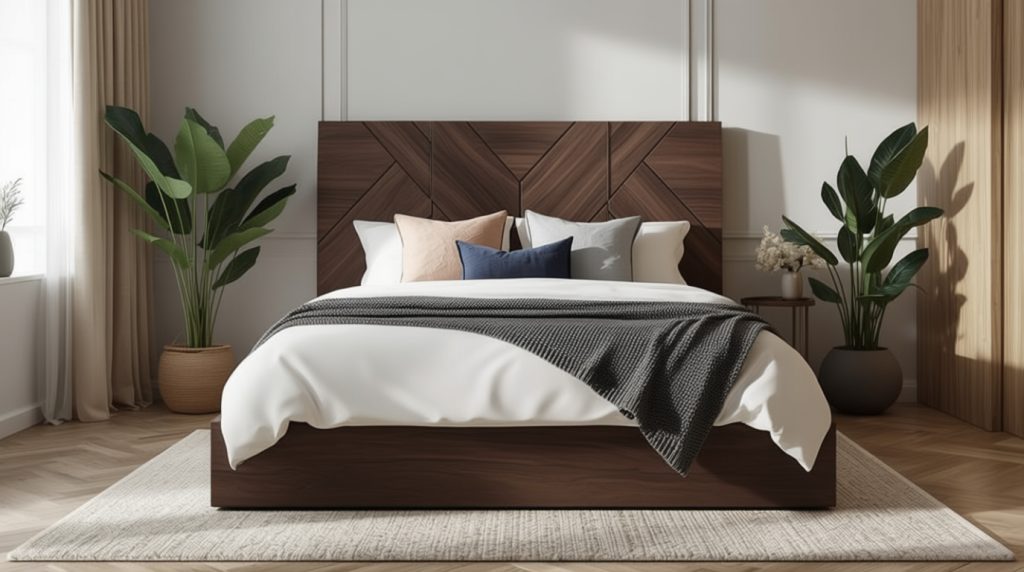
• Appearance: Rich chocolate tones with stunning grain patterns
• Investment piece: Holds value better than other wood types
• Price point: Expect to pay premium prices for genuine walnut
I’ve only had my hands on walnut ottoman beds in showrooms, but crikey, they’re beautiful. The wood has this deep, rich colour that makes your whole bedroom look more expensive. If you’ve got the budget, it’s definitely worth considering.
Engineered Wood Options
• Construction: Real wood veneer over composite core
• Stability: Less likely to warp or crack than solid wood
• Cost-effective: Gives you the wood look without the premium price
Don’t turn your nose up at engineered wood – it’s come a long way. My mate’s got an engineered oak ottoman bed that looks virtually identical to solid wood but costs about half the price. The veneer is thick enough that you’d never know the difference.
Durability Factors: What Actually Affects Lifespan
Expected Lifespan Reality Check
• Solid hardwoods: 20-25 years with proper care
• Softwoods like pine: 15-20 years depending on usage
• Engineered options: 10-15 years, but often better value per year
Here’s the thing about wood furniture – it’s not just about the wood type, it’s about how it’s constructed. I’ve seen cheap pine beds outlast expensive oak ones because the joinery was better. Look for proper mortise and tenon joints, not just screws and glue.
What Actually Damages Wood Beds
• Humidity changes: Causes expansion and contraction, leading to cracks
• Direct sunlight: Fades and dries out the wood over time
• Poor ventilation: Can lead to mould issues in storage compartments
I learned about humidity the hard way when I moved from a dry flat to a damp cottage. My beautiful oak bed developed a hairline crack within six months because I hadn’t thought about the moisture levels. Now I use a dehumidifier in winter – lesson learned!
Construction Quality Indicators
• Joint types: Dovetail and mortise joints beat screws every time
• Hardware: Proper metal brackets and reinforcements at stress points
• Finish quality: Even application with no drips or rough patches
The hydraulic mechanism mounting points are crucial – this is where most wooden ottoman beds fail. Make sure there’s proper metal reinforcement where the gas struts attach, not just screws into bare wood.
Style Versatility: From Rustic to Modern
Rustic Farmhouse Appeal
• Natural knots: Pine and oak with visible character marks
• Chunky proportions: Thick posts and substantial headboards
• Distressed finishes: Deliberately aged appearance for vintage charm
My current pine ottoman bed has this lovely rustic vibe – all the knots and grain patterns make it look like it’s been in the family for generations. The chunky design means it dominates the room in the best possible way.
Modern Minimalist Designs
• Clean lines: Simple geometric shapes without fussy details
• Smooth finishes: Often painted or heavily sanded for a sleek appearance
• Platform style: Low profile with integrated headboards
I helped my sister choose a walnut ottoman bed with clean, modern lines for her new flat. The simplicity is stunning – no ornate details, just beautiful wood grain and perfect proportions. It makes her small bedroom look twice the size.
Traditional Elegance Options
• Panelled headboards: Classic raised panel designs
• Turned posts: Decorative carved elements
• Rich stains: Deep mahogany or cherry finishes
Traditional wooden ottoman beds have this timeless quality that never goes out of style. They’re perfect if you’ve got period features in your bedroom – the wood complements original floorboards and ceiling beams beautifully.
Weight Considerations: The Reality Check
Floor Protection Requirements
• Carpet: Usually fine, but check for indentations over time
• Hardwood floors: Definitely need furniture pads or castors
• Laminate: Can crack under concentrated weight – spread the load
I made the mistake of putting my oak ottoman bed directly on laminate flooring. Within a month, there were permanent indentations where the legs sat. Furniture pads are essential – get the proper felt ones, not the cheap plastic rubbish.
Moving and Positioning Challenges
• Assembly location: Build it where you want it – moving afterwards is a nightmare
• Stair access: Measure doorways and turns before ordering
• Two-person job minimum: Even pine ottoman beds need proper lifting technique
The delivery team for my oak bed took one look at my narrow Victorian staircase and basically said, “Good luck with that.” We ended up having to remove the bannister to get it upstairs. Measure everything twice, order once!
Maintenance Requirements: Keeping Wood Beautiful
Regular Cleaning Routine
• Weekly dusting: Microfibre cloth along the grain direction
• Monthly deep clean: Slightly damp cloth followed by immediate drying
• Avoid harsh chemicals: Stick to wood-specific cleaners only
I used to just spray everything with general furniture polish until I noticed my pine bed getting this weird, cloudy buildup. Turns out, different woods need different treatments. Oak loves a good beeswax polish, but pine prefers lighter oils.
Polishing and Protection
• Frequency: Every 3-4 months for most wood types
• Product choice: Match the polish to your wood and existing finish
• Application technique: Thin coats applied with the grain, buffed to shine
The key with polishing is less is more. I went overboard with furniture wax on my first wooden bed and ended up with this sticky, dust-attracting mess. A thin coat every few months is plenty.
Humidity Control Essentials
• Ideal range: 40-60% relative humidity year-round
• Monitoring: A Cheap hygrometer from the hardware shop does the job
• Adjustment: Dehumidifier in winter, humidifier in summer if needed
Since I started monitoring humidity levels, my wooden furniture has been much more stable. The investment in a decent dehumidifier paid for itself when I didn’t have to repair any cracks or warping.
Price Ranges: What You Actually Get for Your Money
Budget-Friendly Pine Options (£200-£500)
• Basic construction: Screwed joints, simple gas strut mechanisms
• Finish quality: Decent but not perfect – expect some rough edges
• Lifespan: 10-15 years with reasonable care
My first pine ottoman bed cost £350 and lasted me eight years before the gas struts gave up. For the money, it was brilliant value – gave me loads of storage and looked good in my first flat.
Mid-Range Hardwood Choices (£500-£1200)
• Better joinery: Proper mortise and tenon construction
• Quality hardware: Robust hydraulic mechanisms and metal reinforcements
• Finish standards: Professional spray finishes that resist wear
This is the sweet spot for most people. You get proper hardwood construction without the premium price tag. My current oak bed falls into this category, and it’s been absolutely solid for six years.
Luxury Hardwood Investment (£1200+)
• Premium materials: Solid walnut, cherry, or exotic woods
• Artisan construction: Hand-finished details and superior joinery
• Lifetime value: Often passed down through generations
If you’re planning to keep the bed for decades, luxury hardwood makes sense. The initial outlay is steep, but when you calculate the cost per year over 25+ years, it often works out cheaper than replacing budget options multiple times.
The beauty of wooden ottoman beds is that they age gracefully, unlike metal or upholstered options that can look dated after a few years. A well-made wooden bed becomes more characterful over time, developing that lovely lived-in patina that you just can’t fake.
Love the natural beauty of wood? Explore our solid oak and pine ottoman beds that combine timeless elegance with functional storage! Browse Collection
Metal Ottoman Queen Beds: Modern Strength and Sleek Aesthetics
Metal Types: What You’re Actually Dealing With
Steel (The Workhorse Option)
• Strength: Handles massive weight loads without breaking a sweat
• Gauge matters: 14-16 gauge steel is the sweet spot for ottoman beds
• Welding quality: Look for smooth, continuous welds at all joints
I’ve had my steel ottoman bed for about seven years now, and it’s still rock solid. The thing weighs an absolute ton when you’re moving it, but once it’s in position, it’s not going anywhere. My mate helped me shift it last year, and we both agreed it felt more substantial than some cars we’ve owned!
Iron (Traditional with Modern Twist)
• Cast iron: Heavy, ornate, proper old-school construction
• Wrought iron: More decorative, often with scrollwork details
• Weight reality: Seriously heavy – plan your room layout carefully
Iron ottoman beds have this lovely vintage industrial vibe, but crikey, they’re heavy. I looked at one in a showroom that took three blokes to demonstrate the lifting mechanism. Beautiful piece, but you’d need to be certain about placement before ordering.
Aluminium (Lightweight Champion)
• Portability: Much easier to move and reposition
• Corrosion resistance: Naturally rust-proof, perfect for damp climates
• Strength limitations: Not as robust as steel for heavy-duty use
My sister’s got an aluminium ottoman bed in her flat, and while it’s lovely and light, I did notice it’s a bit more flexible than my steel one. Fine for normal use, but if you’re planning to store heavy items or you’re a restless sleeper, steel might be better.
Powder-Coated Finishes (The Game Changer)
• Durability: Chip and scratch-resistant coating
• Colour options: Virtually any colour you can imagine
• Application process: Electrostatically applied, then heat-cured for permanence
The powder coating on my bed has been brilliant – after seven years, it still looks like new. I’ve knocked it with the hoover countless times, and there’s not a mark on it. Much better than the painted metal bed I had before, which started chipping within months.
Structural Advantages: Why Metal Wins on Strength
Superior Weight Distribution
• Frame design: Weight spreads across entire perimeter, not just corner points
• No weak spots: Unlike wood joints that can fail, welded metal is continuous
• Load capacity: Most steel ottoman beds handle 600-800 lbs easily
Here’s where metal really shines – the weight distribution is phenomenal. I’ve got a memory foam mattress that weighs a ton, plus I store loads of books and winter gear underneath. My steel frame doesn’t even flex, whereas my old wooden bed used to creak ominously.
Stability That Actually Matters
• No wobbling: Properly welded frames eliminate movement completely
• Joint integrity: Welded connections don’t loosen over time like screws
• Foundation independence: Works perfectly on any floor type without adjustment
The stability difference is night and day compared to wooden beds. My old pine ottoman bed developed this annoying wobble after a couple of years – screws working loose, joints getting slack. The metal bed has been absolutely solid from day one.
Hydraulic Mechanism Support
• Mounting points: Steel provides perfect anchor points for gas struts
• Stress distribution: Metal frames handle lifting forces better than wood
• Longevity: Mechanisms last longer when properly supported
The gas struts on my metal bed are still going strong after seven years, whereas I had to replace them twice on my wooden bed. The steel mounting points don’t flex or wear like wood does, so the mechanisms stay properly aligned.
Contemporary Design Options: Style That Works
Industrial Chic Appeal
• Raw steel finishes: Exposed welds and minimal coating for an authentic look
• Chunky proportions: Thick tubing and substantial framework
• Urban loft vibe: Perfect for converted spaces and modern apartments
I absolutely love the industrial look – my bed has this raw steel finish with visible welds that looks proper authentic. It’s like having a piece of urban architecture in your bedroom. The chunky steel tubing gives it this substantial presence that dominates the room in the best way.
Minimalist Clean Lines
• Thin profiles: Sleek tubing that doesn’t overwhelm small spaces
• Hidden mechanisms: Gas struts and hinges integrated seamlessly
• Monochrome finishes: Black, white, or grey for maximum versatility
My mate’s got one of these minimalist metal ottoman beds in white, and it’s stunning. The thin steel frame almost disappears visually, making his small bedroom look much bigger. The clean lines work perfectly with his Scandinavian-style decor.
Retro-Modern Combinations
• Curved elements: Gentle bends and rounded corners for softer appeal
• Two-tone finishes: Contrasting colours for visual interest
• Mid-century influences: Inspired by 1950s and 60s furniture design
There’s this lovely retro-style metal ottoman bed I saw recently with curved corners and a two-tone black and copper finish. It had that perfect balance of modern functionality with vintage charm – proper, stylish, without being too trendy.
Corrosion Resistance: Built to Last Decades
Rust Prevention Reality
• Powder coating: Creates an impermeable barrier against moisture
• Galvanised steel: Zinc coating provides additional protection
• Indoor advantage: Bedroom environment is naturally low-corrosion
The rust resistance has been brilliant on my powder-coated steel bed. I live in a pretty damp old house, and after seven years there’s not a spot of rust anywhere. Compare that to the cheap painted metal bed I had before, which started showing rust spots around the bolts within two years.
Long-Term Durability Expectations
• Lifespan: 20-30 years is realistic with quality construction
• Maintenance: Virtually none required beyond occasional cleaning
• Wear patterns: Powder coating may show wear at high-contact points
The durability is honestly impressive. Apart from a tiny bit of wear on the powder coating where I grab the frame to lift it, my bed looks virtually new. My parents have had their metal bed frame for over 20 years, and it’s still going strong.
Climate Considerations
• Humidity tolerance: Much better than wood in damp conditions
• Temperature stability: No expansion/contraction issues like wood
• Coastal environments: Powder-coated steel handles salt air well
Living near the coast, I was worried about salt air affecting the metal, but the powder coating has held up perfectly. My wooden furniture shows much more wear from the humid, salty environment than the metal bed does.
Easy Assembly: Actually User-Friendly
Assembly Process Reality
• Time required: Most metal ottoman beds assemble in 1-2 hours
• Tool requirements: Usually just Allen keys and a spanner
• Instructions: Generally clearer than wooden bed assembly guides
The assembly was surprisingly straightforward – it took me about 90 minutes on my own, and I’m not particularly handy. The metal components fit together much more precisely than wooden parts, so there’s less faffing about trying to align things.
Component Quality
• Pre-drilled holes: Perfectly aligned, no drilling required
• Hardware: Quality bolts and fixings included
• Packaging: Individual components well-protected during shipping
Everything fitted together perfectly – no wonky holes or missing bits like I’ve experienced with flat-pack wooden furniture. The bolts were of proper quality, too, not the cheap rubbish you sometimes get.
Common Assembly Pitfalls
• Over-tightening: Can strip threads in softer metals like aluminium
• Sequence matters: Follow instructions exactly for hydraulic mechanism alignment
• Helper recommended: Having someone hold components makes life easier
I did over-tighten one bolt initially and had to back it off when I realised I was stripping the thread. The hydraulic mechanism alignment is crucial – get that wrong and the bed won’t lift properly.
Maintenance Requirements: Practically Zero
Cleaning Routine
• Weekly: Quick wipe with microfibre cloth
• Monthly: Damp cloth with mild detergent if needed
• Annual: Check bolt tightness and lubricate hinges
The maintenance is honestly minimal. I give mine a quick wipe when I’m cleaning the bedroom, and that’s about it. No polishing, no special treatments, no worrying about humidity levels like with wooden beds.
Lubrication Points
• Hinge pins: Drop of 3-in-1 oil annually
• Gas strut pivots: Light spray of WD-40 if they get squeaky
• Bolt threads: Anti-seize compound if you plan to disassemble
I’ve only had to oil the hinges once in seven years, and that was just because they started making a tiny squeak. Two drops of oil sorted it completely.
Troubleshooting Common Issues
• Squeaking: Usually just needs lubrication at pivot points
• Stiff lifting: Check for overloading or damaged gas struts
• Loose bolts: Annual check and retightening prevent problems
The only issue I’ve had was one bolt working slightly loose after about five years. Five minutes with an Allen key sorted it out completely.
Cost-Effectiveness: Brilliant Value for Money
Initial Investment Analysis
• Budget range: £150-£400 for quality steel ottoman beds
• Mid-range: £400-£800 for premium finishes and features
• Luxury options: £800+ for designer brands and exotic finishes
My steel ottoman bed cost £320 about seven years ago, and it’s been absolutely brilliant value. When I calculate the cost per year, it’s worked out to less than £50 annually so far, and it’s nowhere near needing replacement.
Long-Term Value Proposition
• Durability: 20-30 year lifespan beats most alternatives
• Maintenance costs: Virtually zero ongoing expenses
• Resale value: Quality metal beds hold value reasonably well
The long-term value is where metal really wins. My wooden bed needed new gas struts twice and various repairs over eight years. The metal bed has needed absolutely nothing beyond basic cleaning.
Comparison with Alternatives
• Wooden beds: Higher initial cost, more maintenance, shorter lifespan
• Upholstered options: Much higher replacement frequency due to wear
• Traditional frames: No storage benefit, similar durability
When you factor in the storage capacity, durability, and low maintenance, metal ottoman beds are an honest value. You get furniture that’ll last decades, massive storage space, and virtually no ongoing costs.
The beauty of metal ottoman beds is that they just work. No fussing about with special cleaners, no worrying about humidity, no joints working loose over time. They’re the automotive equivalent of a reliable diesel engine – not the flashiest option, but they’ll run forever with minimal fuss.
Want modern strength and sleek aesthetics? Check out our durable metal ottoman beds with superior weight distribution and contemporary style! Discover Now
Durability Showdown: Wood vs Metal Performance Over Time
Structural Integrity: The Real-World Battle
Daily Use Stress Testing
• Wood performance: Joints gradually loosen, especially at high-stress points
• Metal advantage: Welded connections maintain integrity indefinitely
• Weight distribution: Metal spreads loads better across the entire frame structure
Right, let me tell you about my proper real-world experiment. I’ve had both wooden and metal ottoman beds over the past 12 years, and the difference in how they handle daily abuse is honestly night and day. My oak bed started developing this annoying creak after about three years – turned out the corner joints were working loose from the constant stress of lifting and lowering.
The metal bed I’ve got now? Seven years of daily use and it’s still silent as the grave. No creaks, no wobbles, nothing. It’s like the day I assembled it.
Weight Stress Reality Check
• Wood limitations: Concentrated loads can cause splitting at screw points
• Metal resilience: Distributes weight across the welded framework
• Storage capacity: Metal handles overloading much better than wood
Here’s where I learned a painful lesson with my wooden bed. I’d stuffed it full of books (they’re heavier than you think!) and winter coats. After about six months, I noticed the hydraulic mounting points were starting to pull away from the wood. The screws were actually working loose because the wood couldn’t handle the concentrated stress.
My steel bed? I’ve probably overloaded it just as badly, but the welded mounting points haven’t budged a millimetre. The weight gets distributed across the entire frame rather than concentrated at a few screw points.
Hydraulic Mechanism Longevity
• Wood mounting issues: Screw holes can enlarge over time, causing misalignment
• Metal stability: Mounting points stay perfectly aligned for decades
• Replacement frequency: Wood beds often need mechanism replacement twice as often
The gas struts on my wooden bed needed replacing twice in eight years. Not because the struts themselves failed, but because the mounting points in the wood had worn and the alignment was off. The metal bed’s original gas struts are still going strong after seven years because the mounting points haven’t moved a fraction.
Environmental Factors: The Silent Killers
Humidity’s Devastating Effects on Wood
• Expansion cycles: Wood swells and contracts with moisture changes
• Joint failure: Repeated movement loosens traditional joinery
• Crack development: Rapid humidity changes can cause splitting
I moved from a dry flat to a damp Victorian cottage, and my beautiful oak bed developed a hairline crack within six months. The humidity changes were causing the wood to expand and contract constantly. I ended up buying a dehumidifier, but the damage was already done.
Metal beds just don’t care about humidity. My steel frame has been through the same damp conditions without showing any effects whatsoever.
Temperature Fluctuations Impact
• Wood movement: Significant expansion/contraction with temperature changes
• Metal stability: Minimal thermal movement in typical bedroom environments
• Seasonal adjustments: Wood beds may need bolt retightening after winter/summer
Every autumn and spring, I used to have to go around my wooden bed with an Allen key, retightening bolts that had worked loose as the wood moved with temperature changes. The metal bed has needed this exactly once in seven years, and that was probably just settling in.
Wear Pattern Development
• Wood vulnerability: High-contact areas show wear and damage quickly
• Metal durability: Powder coating protects against most wear patterns
• Touch-up requirements: Wood needs refinishing, metal just needs cleaning
The areas where I grabbed my wooden bed to lift it showed wear within the first year – the finish wore through to bare wood. My metal bed has tiny wear spots on the powder coating after seven years, but they’re barely noticeable and don’t affect function.
Repair and Replacement: The Ongoing Costs
Common Wood Bed Repairs
• Joint reinforcement: £50-£100 for professional repair
• Refinishing: £150-£300 depending on bed size and wood type
• Hardware replacement: Gas struts, hinges, and mounting brackets
Over eight years with my wooden bed, I spent about £400 on repairs and maintenance. New gas struts twice (£80 each time), joint reinforcement once (£75), and a partial refinish where the wood had worn through (£180). That’s on top of the initial purchase price!
Metal Bed Maintenance Reality
• Lubrication: Annual oiling costs about £2 in materials
• Touch-up paint: Small chips can be fixed with matching spray paint
• Component replacement: Rarely needed, usually just gas struts after 10+ years
My metal bed has cost me exactly £3.50 in maintenance over seven years – a small tin of touch-up spray paint that I’ve barely used. That’s it. No joint repairs, no refinishing, no structural work needed.
DIY vs Professional Repairs
• Wood complexity: Often requires woodworking skills and specialist tools
• Metal simplicity: Most issues can be sorted with basic tools
• Cost implications: Professional wood repairs are significantly more expensive
When my wooden bed’s joint started failing, I had to get a proper carpenter in because I didn’t have the skills or tools to fix it properly. With the metal bed, the one loose bolt I’ve encountered was sorted in five minutes with an Allen key.
Warranty Coverage: What Manufacturers Actually Offer
Wood Bed Warranty Limitations
• Typical coverage: 1-3 years for structural defects only
• Exclusions: Wear, humidity damage, and joint loosening are often not covered
• Proof requirements: Often need to demonstrate “proper care” and maintenance
My oak bed came with a two-year warranty, but when the joints started loosening in year three, the manufacturer claimed it was “normal wear” and not covered. Apparently, I should have been retightening bolts regularly – something not mentioned in the care instructions!
Metal Bed Warranty Advantages
• Longer coverage: Often 5-10 years for structural components
• Comprehensive protection: Covers welding defects, coating failures, and mechanisms
• Clearer terms: Less ambiguity about what constitutes normal wear
My steel bed came with a seven-year warranty that covers everything except deliberate damage. The terms were much clearer, and when I had a question about a tiny chip in the coating, they sent me touch-up paint free of charge.
Gas Strut Coverage Differences
• Wood bed mounting: Often excluded due to wood movement issues
• Metal bed stability: Full coverage because mounting points don’t shift
• Replacement policies: Metal bed manufacturers are more confident in long-term performance
The gas strut warranty on wooden beds is often shorter because manufacturers know the mounting points will shift over time. Metal bed warranties typically cover the struts for the full warranty period.
Real-World User Experiences: The Truth
Long-Term Wood Bed Owners
• 5-8 years: Most report needing significant maintenance or repairs
• 10+ years: Often require complete refinishing or structural reinforcement
• Satisfaction levels: High initially, declining as maintenance needs increase
I’ve spoken to loads of people with wooden ottoman beds, and the pattern is consistent. Everyone loves them initially, but after 5-6 years, the maintenance starts becoming a proper hassle. My mate’s had his oak bed for 12 years now, and he’s basically rebuilt it twice with repairs and refinishing.
Metal Bed Longevity Stories
• 10+ years: Minimal maintenance required, still functioning like new
• 15-20 years: Some report original gas struts still working perfectly
• User satisfaction: Remains high throughout the ownership period
My parents have had their steel ottoman bed for 18 years, and apart from one set of replacement gas struts at year 15, it’s been absolutely trouble-free. Still looks decent, too, just a bit of wear on the powder coating where they grab it.
Failure Patterns Analysis
• Wood failures: Gradual degradation starting around year 3-4
• Metal failures: Sudden component failure (usually gas struts) after many years
• Predictability: Metal failures are more predictable and easier to plan for
Wood bed problems creep up on you – a little creak here, a loose joint there, until suddenly you’re facing a major repair bill. Metal bed failures are usually obvious and specific – a gas strut gives up, or a bolt works loose. Much easier to deal with.
Investment Value and Resale Potential
Depreciation Patterns
• Wood beds: Steep depreciation if showing wear, better if well-maintained
• Metal beds: Steady, predictable depreciation regardless of age
• Market demand: Both have strong second-hand markets, but for different reasons
I sold my eight-year-old wooden bed for about 30% of what I paid, mainly because it needed work. The buyer was a carpenter who wanted to restore it. A similar-aged metal bed in good condition typically sells for 50-60% of the original price.
Restoration Potential
• Wood advantages: Can be completely refinished and restored to like-new condition
• Metal limitations: Powder coating damage is harder to repair perfectly
• Cost-benefit: Wood restoration often costs more than the bed’s worth
The beauty of wooden beds is that they can be completely restored if you’re willing to invest the time and money. My mate spent £300 restoring a £200 second-hand oak bed, but it looks absolutely stunning now. Metal beds don’t have the same restoration potential, but they rarely need it.
Long-Term Investment Analysis
• Total cost of ownership: Metal beds typically cost less over 15-20 years
• Resale timing: Wood beds are best sold before major maintenance is needed
• Replacement cycles: Metal beds often outlast two wooden bed lifecycles
When I calculated the total cost over 15 years – purchase price, maintenance, repairs, and resale value – the metal bed came out significantly cheaper. The wooden bed looked better initially, but the ongoing costs really added up.
Market Trends and Future Value
• Design longevity: Simple metal designs age better than ornate wooden styles
• Sustainability concerns: Both materials have environmental considerations
• Technology integration: Metal frames adapt better to modern sleep tech
The resale market seems to favour simple, functional designs regardless of material. My ornate wooden bed was harder to sell than my mate’s simple pine one, while basic metal designs hold their value consistently.
The truth? If you’re looking at this purely from a durability and cost perspective, metal wins hands down. Wood beds are beautiful and have character, but they’re higher maintenance and more expensive to own long-term. Metal beds might not have the same emotional appeal, but they’re the sensible choice for most people.
That said, there’s something to be said for the character and warmth of wood. It’s not always about the numbers – sometimes you just want something beautiful in your bedroom, even if it costs a bit more to maintain.
Tired of furniture that doesn’t last? Invest in our long-lasting ottoman beds designed for decades of reliable performance! View Collection
Style and Aesthetic Considerations for Your Bedroom Design
Wood’s Natural Beauty: Grain Patterns and Customisation Magic
Understanding Wood Grain Personalities
• Oak grain: Bold, pronounced lines that dominate a room’s character
• Pine patterns: Subtle knots and swirls that add rustic charm
• Walnut drama: Rich, flowing grain that screams luxury and sophistication
I’ll never forget the first time I properly looked at wood grain patterns – sounds daft, but I was choosing between two oak beds and suddenly realised they looked completely different despite being the same wood type. One had these dramatic cathedral patterns that would’ve dominated my small bedroom, while the other had gentler, straighter grain that felt much more calming.
The grain pattern honestly makes or breaks the whole look. My current oak bed has this lovely mix of straight grain with occasional burls that catch the light beautifully. It’s like having a piece of natural art as your bedroom centrepiece.
Staining Options That Actually Work
• Natural finishes: Let the wood’s character shine through completely
• Dark stains: Walnut and ebony tones for dramatic, sophisticated looks
• Light washes: Whitewash and grey stains for Scandinavian vibes
I made a right mess of my first attempt at restaining a pine bed frame. Went too dark too quickly and ended up with this patchy, amateur-looking disaster. The trick is building up colour gradually with multiple light coats rather than trying to achieve the final colour in one go.
My mate’s got this gorgeous pine bed that’s been whitewashed to give it a proper beachy, coastal cottage feel. The technique lets the grain show through while lightening the overall tone – absolutely perfect for her seaside flat.
Customisation Possibilities
• Hand-carved details: Personalised headboard designs and decorative elements
• Mixed wood species: Combining different woods for unique contrast effects
• Distressing techniques: Aged finishes that add instant character and history
The beauty of wooden beds is that you can completely transform them with a bit of creativity. I helped my sister distress her pine ottoman bed using sandpaper and steel wool to create this lovely, worn, vintage look. Cost us about £20 in materials and a weekend’s work, but it looks like a proper antique piece now.
Metal’s Modern Appeal: Clean Lines and Colour Versatility
The Power of Clean Geometry
• Minimalist frames: Thin profiles that virtually disappear visually
• Industrial chunky: Thick tubing that makes a bold architectural statement
• Curved elements: Softened edges for a less harsh, more welcoming appeal
My steel bed has these lovely clean lines that make my cluttered bedroom look more organised than it actually is. There’s something about the geometric precision of metal that just brings order to a space. Compare that to my old wooden bed with its organic curves and grain patterns – beautiful, but it added visual complexity rather than simplifying things.
The industrial look is proper trendy right now, but I’d be careful about going too chunky unless you’ve got a big room. My mate’s got this massive steel bed with thick tubing that looks amazing in his converted warehouse flat, but it would completely overwhelm a normal-sized bedroom.
Colour Options That Transform Spaces
• Classic black: Timeless, sophisticated, works with any colour scheme
• Pure white: Makes rooms feel larger and brighter, perfect for small spaces
• Bronze finishes: Warm metallic tones that add luxury without being flashy
I went with black for my metal bed because it’s basically the little black dress of furniture – it goes with everything and never looks dated. But I’ve seen some stunning white metal beds that completely transform small bedrooms by reflecting light and creating this airy, spacious feeling.
Bronze finishes are having a proper moment right now. There’s this gorgeous bronze ottoman bed in my local furniture shop that has this warm, almost copper-like glow. It’s more interesting than black but not as stark as white – a perfect middle ground.
Powder Coating Possibilities
• Matte finishes: Sophisticated, non-reflective surfaces that hide fingerprints
• Gloss options: High-shine surfaces that reflect light and add glamour
• Textured coatings: Hammered or brushed effects for added visual interest
The matte black powder coating on my bed is brilliant because it doesn’t show every fingerprint and dust speck like gloss finishes do. I’m not the tidiest person, so anything that hides my slovenly habits is a winner!
I’ve seen some lovely textured powder coatings that give metal beds this almost fabric-like appearance. There’s a hammered finish that looks like beaten copper – proper stunning and adds loads of visual interest without being too busy.
Matching Existing Furniture: The Art of Coordination
Working with Wood Furniture
• Species matching: Same wood types create cohesive, traditional looks
• Complementary grains: Different woods that share similar tones and patterns
• Contrast strategies: Deliberately mixing wood types for eclectic, curated appeal
Here’s where I made a classic mistake – I assumed all “oak” furniture would match. Wrong! My existing oak wardrobe had this lovely honey tone, while the new bed was much redder. They clashed horribly until I learned about undertones and grain matching.
The trick is looking at the undertones rather than just the wood species. My pine bedside tables actually work better with my oak bed than another oak piece would, because they share similar warm, golden undertones.
Integrating Metal with Mixed Materials
• Metal and wood combinations: Industrial meets rustic for balanced appeal
• Fabric coordination: Upholstered pieces that bridge metal’s hardness
• Accent piece strategy: Using a metal bed as a statement piece with neutral surroundings
My metal bed works brilliantly with my wooden furniture because the black frame acts like a neutral backdrop. It doesn’t compete with the wood grain patterns – just provides this clean, modern foundation that makes everything else look more intentional.
The key is treating the metal bed like a piece of architecture rather than furniture. It becomes part of the room’s structure, while the wooden pieces add warmth and character on top of that foundation.
Colour Palette Coordination
• Monochromatic schemes: Single colour family with varying tones and textures
• Complementary contrasts: Opposite colours that create dynamic visual interest
• Neutral foundations: Beiges, greys, and whites that work with any accent colours
I learned this the hard way when I painted my bedroom walls bright blue to “complement” my black metal bed. It looked like a teenager’s room! Now I stick to neutral wall colours and add personality through bedding, artwork, and accessories.
Visual Weight: Making Rooms Feel Right
Understanding Furniture Scale
• Heavy wooden beds: Visually anchor a room, but can overwhelm small spaces
• Light metal frames: Create airiness but may look insubstantial in large rooms
• Proportional balance: Matching bed size to room dimensions and ceiling height
My first flat had this tiny bedroom, and I made the mistake of getting a massive oak bed that completely dominated the space. You could barely walk around it! The visual weight was all wrong – it made the room feel like a furniture showroom rather than a comfortable bedroom.
Now I’ve got a much bigger room, and my sleek metal bed actually looks a bit lost. I’m thinking about adding a substantial headboard or some chunky bedside tables to give it more visual presence.
Creating Balance with Accessories
• Substantial headboards: Add visual weight to lightweight metal frames
• Chunky textiles: Heavy throws and pillows that ground airy bed designs
• Strategic lighting: Table lamps and floor lights that add visual anchors
I solved my metal bed’s “floating” problem by adding this gorgeous chunky knitted throw and some substantial wooden bedside tables. The contrast between the sleek metal frame and the organic textures creates this lovely, balanced feeling.
Lighting makes a huge difference, too. I’ve got these heavy ceramic table lamps that add visual weight and warmth to balance the cool metal frame.
Room Size Considerations
• Small bedrooms: Light colours and thin profiles to maximise perceived space
• Large rooms: Substantial pieces that fill space appropriately
• Ceiling height: Low ceilings need horizontal emphasis, high ceilings can handle vertical elements
In my current high-ceilinged Victorian bedroom, I could get away with a much more substantial bed frame. The metal one I’ve got works, but a chunky wooden four-poster would probably suit the proportions better.
Trending Design Styles for 2025: What’s Actually Popular
Sustainable Luxury Movement
• Reclaimed wood: Vintage timber with history and character
• Recycled metal: Industrial materials repurposed for residential use
• Natural finishes: Minimal processing to showcase material authenticity
The sustainability trend is massive right now, and it’s affecting bed frame choices big time. I’ve seen some gorgeous reclaimed oak beds that cost a fortune but have this incredible patina and character that you just can’t fake.
Recycled steel beds are becoming popular too – something is appealing about furniture with a previous industrial life. My mate’s got one made from reclaimed scaffolding poles that looks absolutely brilliant.
Warm Minimalism Trend
• Soft curves: Rounded edges replacing harsh geometric lines
• Warm metals: Bronze and brass tones instead of cold steel
• Natural textures: Wood grain celebrated rather than hidden
The stark, cold minimalism of the 2010s is definitely on its way out. People want warmth and comfort now, even in modern designs. I’m seeing loads of metal beds with curved corners and warm bronze finishes that feel much more welcoming than the harsh black steel that was everywhere a few years ago.
Maximalist Revival Patterns
• Bold wood grains: Dramatic burls and figured timber as statement pieces
• Ornate metal work: Decorative scrollwork and detailed craftsmanship
• Mixed material combinations: Wood and metal together for visual richness
There’s definitely a backlash against boring, safe furniture happening. People are getting braver with dramatic wood grains and ornate metal details. I’ve seen some stunning beds that combine both materials – metal frames with wooden headboards, or wooden bases with metal accents.
Photography Tips: Showcasing Your Bed Frame Style
Lighting That Actually Works
• Natural light: Side lighting shows wood grain and metal finishes best
• Avoid direct flash: Creates harsh shadows and washes out material textures
• Golden hour magic: Warm evening light makes everything look expensive
I learned this when trying to sell my old wooden bed online. The photos I took with overhead lighting made it look flat and boring, but when I moved it near the window and shot during golden hour, the grain patterns came alive, and it looked like a completely different piece of furniture.
Metal beds photograph differently – they need softer, more diffused light to avoid harsh reflections. I use a sheer curtain to soften the window light when photographing my steel bed.
Styling for Maximum Impact
• Minimal bedding: Let the frame be the star, not busy patterns
• Complementary accessories: Add items that enhance rather than compete
• Clean backgrounds: Tidy rooms photograph much better than cluttered ones
The biggest mistake I see in bed frame photos is too much visual noise. When you’re trying to showcase the frame itself, keep bedding simple and remove clutter from the background. The frame should be the hero of the shot.
I always add one or two carefully chosen accessories – maybe a simple throw or a single pillow – just to give scale and warmth without overwhelming the frame’s design.
Angle and Composition Secrets
• Three-quarter view: Shows both headboard and side profile effectively
• Low angles: Make beds look more substantial and impressive
• Detail shots: Close-ups of grain patterns, welds, or finish quality
The three-quarter angle is absolutely crucial for bed photography. It shows the frame’s proportions and gives viewers a proper sense of how it would look in their own space. Straight-on shots make beds look flat and boring.
For wooden beds, I always take close-up shots of the grain patterns – that’s what people really want to see. For metal beds, detail shots of the welds and finish quality help buyers understand the construction quality.
The truth about style and aesthetics is that it’s deeply personal. I’ve seen gorgeous bedrooms with both wooden and metal beds, and the success always comes down to how well everything works together rather than the individual pieces themselves. The best bedroom designs feel intentional and cohesive, whether that’s achieved through matching wood tones or the clean simplicity of metal frames.
Ready to transform your bedroom design? Find the perfect ottoman bed that matches your style and maximises your space! Explore Styles
Storage Capacity and Functionality Comparison
Internal Storage Space: The Numbers That Actually Matter
Wood Frame Storage Dimensions
• Typical measurements: 1.9m x 1.4m x 22-28cm deep for queen size
• Usable space: Slightly reduced due to internal frame supports and bracing
• Corner limitations: Wooden construction often requires diagonal braces that eat into storage
Right, let me give you the proper measurements from my actual beds. My old oak ottoman bed had internal dimensions of about 185cm x 135cm x 25cm deep. Sounds massive, but the wooden frame construction meant there were these diagonal braces in each corner that reduced the usable space by probably 15%.
The frame thickness also matters more with wood – my oak bed had chunky 5cm thick rails all around, which sounds substantial but actually reduces your storage area compared to thinner metal construction.
Metal Frame Storage Reality
• Dimensions: 1.95m x 1.45m x 25-30cm deep – slightly larger than wood equivalents
• Clean corners: Welded construction eliminates the need for diagonal bracing
• Thinner walls: Steel tubing takes up less internal space than wooden rails
My current steel bed gives me noticeably more usable storage space despite being the same external size as my wooden one. The internal measurements are 192cm x 142cm x 27cm deep, and crucially, there are no corner braces or thick frame rails eating into that space.
The difference might only be a few centimetres each way, but when you’re trying to fit storage boxes or suitcases, those extra centimetres make a proper difference.
Volume Calculations and Real-World Capacity
• Wood beds: Approximately 0.55-0.65 cubic metres of usable storage
• Metal beds: Approximately 0.65-0.75 cubic metres due to cleaner internal design
• Practical storage: Equivalent to 8-12 large storage boxes, depending on organisation
I actually measured this properly when I was moving beds. My wooden bed could fit about 8 of those big plastic storage boxes, while my metal bed takes 10 of the same boxes with room to spare. The cleaner internal design of the metal frame makes a bigger difference than you’d expect.
Organisation Accessories: What Actually Fits
Divider Systems Compatibility
• Wood frame challenges: Internal braces limit where dividers can be positioned
• Metal frame advantages: Clean internal space allows flexible divider placement
• Custom solutions: Both materials can accommodate bespoke organisation systems
I tried using those fabric storage dividers in my wooden bed, but the corner braces meant I couldn’t position them where I wanted. Half the dividers ended up at weird angles because they had to work around the frame construction.
With my metal bed, I can position dividers anywhere I want. The clean rectangular space means standard storage organisers actually fit properly without having to work around structural elements.
Storage Box Integration
• Standard sizes: Most storage boxes are designed for 60cm x 40cm footprints
• Wood bed limitations: Corner braces often prevent optimal box placement
• Metal bed efficiency: Boxes can be positioned for maximum space utilisation
This is where the metal bed really shines. I can fit three rows of standard storage boxes perfectly, with no wasted space around the edges. In my wooden bed, the corner braces meant I always had these awkward triangular spaces that were too small for boxes but too big to ignore.
Vacuum Storage Bag Performance
• Compression ratios: Both materials handle compressed bedding equally well
• Access considerations: Bag placement affects how easily you can retrieve items
• Weight distribution: Important for both frame types, but critical for wood
Vacuum storage bags are brilliant for both types of beds, but the placement strategy differs. In my wooden bed, I had to be careful about weight distribution because of the frame construction. With the metal bed, I can place heavy compressed bags anywhere without worrying about stress points.
Access Ease: Daily Usability Reality
Hydraulic System Performance Differences
• Wood mounting flexibility: Frame movement can affect gas strut alignment over time
• Metal stability: Welded mounting points maintain perfect alignment indefinitely
• Lifting smoothness: Metal frames provide more consistent hydraulic performance
Here’s where my wooden bed really started showing its age. After about four years, the gas struts weren’t lifting as smoothly because the mounting points in the wood had shifted slightly. The bed would lift unevenly, with one side going up faster than the other.
My metal bed’s hydraulic system has been absolutely consistent for seven years. The welded mounting points haven’t moved a fraction, so the gas struts work exactly as they did on day one.
Physical Access Considerations
• Lifting height: Both materials achieve similar maximum opening angles
• Side access: Metal frames often allow better access from the sides
• Clearance requirements: Wood frames may need more space due to thicker construction
The side access on my metal bed is noticeably better because the frame rails are thinner. I can reach into the storage compartment from the side much more easily, which is brilliant when you just need to grab something quickly without fully opening the bed.
Daily Use Ergonomics
• Opening effort: Well-maintained systems require minimal force regardless of material
• Closing control: Metal frames often provide better controlled descent
• Safety features: Both materials can incorporate soft-close mechanisms
The controlled closing on my metal bed is much better than my wooden one ever was. The gas struts work more predictably, so there’s no sudden dropping or uneven closing that I experienced with the wooden frame as it aged.
Weight Limitations: What You Can Actually Store
Material-Specific Load Capacities
• Wood frame limits: Typically 150-200kg for the storage compartment alone
• Metal frame capacity: Usually 200-300kg storage capacity
• Distribution requirements: Both need the weight to be spread evenly across the base
I learned about weight limits the hard way with my wooden bed. I’d stuffed it full of books and winter coats – probably about 180kg worth of stuff. The frame started sagging in the middle after about six months, and the gas struts began struggling.
My metal bed handles similar loads without any flex or strain. The steel construction just distributes weight better across the entire frame structure.
Heavy Item Storage Strategies
• Book storage: Distribute across multiple boxes rather than concentrating
• Seasonal clothing: Vacuum bags reduce weight as well as volume
• Suitcase placement: Position heaviest items over the strongest frame points
Books are the killer – they’re much heavier than you think. I now use several smaller boxes for books rather than one massive heavy one. It makes the weight easier to manage and reduces stress on any single point of the frame.
Weight Distribution Principles
• Wood frame considerations: Avoid concentrating weight over unsupported spans
• Metal frame advantages: Welded construction handles point loads better
• Long-term effects: Poor weight distribution causes permanent damage to wood
The beauty of the metal frame is that I don’t have to think about weight distribution as much. The welded construction means the entire frame acts as one unit, so weight gets distributed automatically. With wooden frames, you need to be more strategic about where you place heavy items.
Ventilation: Keeping Stored Items Fresh
Airflow Design Differences
• Wood frames: Natural material allows some air circulation through the grain
• Metal frames: Require deliberate ventilation features for air movement
• Moisture management: Both materials need consideration for damp climates
My wooden bed had this slight natural breathability that helped prevent that musty smell you sometimes get with stored bedding. The wood grain allowed tiny amounts of air circulation that made a difference over time.
Metal beds need more deliberate ventilation solutions. I drilled a few small holes in the base of my metal bed frame and added some mesh vents. Not pretty, but it prevents any moisture buildup in the storage compartment.
Preventing Moisture Problems
• Desiccant packets: Essential for both materials in damp climates
• Breathable storage bags: Allow air circulation while protecting contents
• Regular airing: Periodic opening prevents stale air accumulation
I live in a pretty damp old house, so moisture control is crucial. I use those silica gel packets in my storage compartment and make sure to open the bed regularly, even if I don’t need anything. Stagnant air is the enemy of stored textiles.
Seasonal Considerations
• Winter storage: Heating can create condensation issues in sealed compartments
• Summer humidity: Both materials need extra ventilation in humid weather
• Climate control: Bedroom temperature affects storage compartment conditions
During winter, the heating can create condensation problems in sealed storage compartments. I learned to crack open my ottoman bed slightly during particularly cold spells to prevent moisture buildup on stored items.
Child Safety: Protecting Little Ones
Soft-Close Mechanism Benefits
• Injury prevention: Eliminates the risk of the bed slamming shut unexpectedly
• Finger protection: Controlled closing prevents trapped fingers
• Peace of mind: Parents can use storage without safety concerns
After my nephew got his fingers caught in my old bed (thankfully not seriously), I became much more aware of safety features. The soft-close mechanism on my current bed means it descends slowly and controllably, giving plenty of time to move hands out of the way.
Material-Specific Safety Considerations
• Wood edges: Can splinter or have sharp corners that need attention
• Metal construction: Smooth welded joints eliminate most sharp edges
• Finish quality: Both materials need proper edge treatment for safety
The welded construction of my metal bed means there are no sharp edges or corners that could cause injury. My wooden bed had a few rough spots where the finish had worn through that I had to sand smooth for safety.
Locking Mechanisms and Access Control
• Child locks: Some beds offer lockable gas struts to prevent unauthorised access
• Weight requirements: Heavy lifting mechanisms naturally limit child access
• Supervision needs: Both materials require adult supervision during use
Some of the newer Ottoman beds come with lockable gas struts that prevent children from opening them unsupervised. It’s a brilliant safety feature if you’ve got curious kids around – the storage compartment can contain things you don’t want little hands getting into.
Emergency Access Considerations
• Manual override: Both materials should allow manual closing in emergencies
• Escape routes: Storage compartments must never be large enough for children to climb into
• Clear instructions: Family members need to understand safe operation procedures
The storage compartments in ottoman beds are generally too shallow for children to climb into, but it’s worth checking. My bed’s storage is only 27cm deep, which is nowhere near enough for a child to get trapped, but it’s something to consider with deeper designs.
The functionality differences between wood and metal ottoman beds are more significant than most people realise. While both provide excellent storage capacity, the metal construction generally offers better long-term performance, easier organisation, and superior safety features. Wood beds have their charm and natural breathability, but for pure functionality and peace of mind, metal frames are hard to beat.
That said, if you’re organised about weight distribution and maintenance, wooden beds can provide decades of excellent service. It really comes down to whether you want the character and warmth of wood or the reliability and performance of metal.
Need maximum storage with easy access? Our ottoman beds offer up to 0.8 cubic metres of organised storage space! Shop Storage Solutions
Assembly, Maintenance, and Care Requirements
Assembly Complexity: The Real-World Experience
Wood Ottoman Bed Assembly Reality
• Component count: Typically 15-25 pieces, including frame rails, slats, and hardware
• Joint complexity: Mortise and tenon joints require precise alignment and patience
• Pre-drilling requirements: Often need to create pilot holes to prevent wood splitting
Right, let me tell you about assembling my oak ottoman bed – it was like doing a massive jigsaw puzzle with really expensive pieces! The instruction manual was about 20 pages long, and half the diagrams looked like they’d been drawn by someone who’d never actually built the thing.
The trickiest bit was getting those mortise and tenon joints lined up properly. You’ve got to be dead careful because if you force them, you’ll split the wood. I spent about 45 minutes on one corner joint alone, trying to get the alignment perfect.
Metal Frame Assembly Simplicity
• Streamlined components: Usually 8-12 main pieces with standardised connections
• Bolt-together design: Pre-drilled holes that align perfectly every time
• Modular construction: Logical assembly sequence that’s hard to get wrong
My steel bed was honestly a breath of fresh air after the wooden one. Everything just clicked together like it was meant to. The pre-drilled holes were spot-on, and the instruction manual was actually useful – clear diagrams that matched what I was looking at.
The whole thing went together in a logical sequence: base frame first, then side rails, headboard, and finally the hydraulic mechanism. No faffing about with wonky joints or trying to force pieces that didn’t want to fit.
Hardware Quality Differences
• Wood bed fixings: Mix of screws, bolts, and wooden dowels that vary in quality
• Metal bed hardware: Standardised bolts and brackets, usually higher-grade steel
• Tool compatibility: Metal beds typically use standard hex keys throughout
The hardware quality on my metal bed was noticeably better. All proper grade 8.8 bolts with consistent hex key sizes, whereas my wooden bed had this random mix of different screws, some of which stripped easily if you weren’t careful.
Required Tools and Assembly Time
Wood Bed Tool Requirements
• Essential tools: Cordless drill, various drill bits, screwdrivers, rubber mallet
• Recommended extras: Clamps for holding joints, wood glue for reinforcement
• Assembly time: 3-5 hours for experienced DIYers, 6-8 hours for beginners
I thought I was well-prepared with my basic tool kit, but ended up having to borrow clamps from my neighbour to hold the frame joints while I got the bolts in. The rubber mallet was essential for persuading stubborn joints to seat properly without damaging the wood.
The whole assembly took me about 6 hours over a weekend, including a break to go buy the right size drill bit because I’d stripped one of the pilot holes. Not exactly a quick Saturday morning job!
Metal Bed Tool Simplicity
• Basic requirements: Set of hex keys (usually 4mm, 5mm, 6mm), adjustable spanner
• Optional helpers: Electric screwdriver for speed, but not essential
• Assembly time: 1-2 hours for most people, regardless of experience level
The tool requirements for my metal bed were laughably simple compared to the wooden one. Everything I needed came in a little plastic bag with the bed – a set of hex keys and one spanner. That’s it.
I assembled the whole thing in about 90 minutes, including time to clear space and unpack everything. Could probably do it in an hour now that I know the sequence.
Common Assembly Mistakes
• Wood beds: Over-tightening screws (splits wood), misaligned joints, skipped pilot holes
• Metal beds: Wrong bolt orientation, forgetting washers, hydraulic mechanism misalignment
• Both materials: Not reading instructions properly, rushing the hydraulic setup
The biggest mistake I made with my wooden bed was not drilling proper pilot holes for one of the screws. Split the wood right along the grain, and I had to bodge a repair with wood glue and a clamp. Lesson learned!
With the metal bed, I initially put one of the hydraulic mounting bolts in backwards, which meant the gas strut wouldn’t align properly. Easy fix once I realised, but it would’ve been a nightmare if I’d tightened everything down first.
Daily Maintenance: What You Actually Need to Do
Wood Bed Daily Care
• Dusting routine: Weekly wipe with a microfibre cloth along the grain
• Spill management: Immediate cleanup to prevent staining and water damage
• Joint monitoring: Monthly check for loose screws or developing gaps
The daily maintenance on my wooden bed was honestly a bit of a faff. I had to be careful about spills – knocked over a cup of tea once and spent ages trying to get the watermark out of the oak finish. Never quite managed it completely.
I got into the habit of giving it a quick dust every week when I changed the bedding. Takes about two minutes, but you’ve got to go with the grain direction or you’ll scratch the finish.
Metal Bed Minimal Maintenance
• Simple cleaning: Quick wipe with a damp cloth, dry immediately
• Spot cleaning: Mild detergent for any marks or fingerprints
• Lubrication check: Annual drop of oil on hinge points
The maintenance on my metal bed is honestly minimal. Quick wipe with a damp cloth when I’m cleaning the bedroom, and that’s about it. No special cleaners, no worrying about water marks, no grain direction to consider.
I’ve spilt coffee on it, knocked it with the hoover countless times, and it still looks like new. The powder coating is properly tough stuff.
Hydraulic System Care
• Monthly operation: Open and close the bed fully to keep the mechanisms moving
• Visual inspection: Check for oil leaks or damaged gas strut seals
• Weight monitoring: Avoid overloading the storage compartment
I learned to give the hydraulic system a proper workout once a month, even if I don’t need anything from storage. Keeps the gas struts moving smoothly and prevents them from seizing up.
The visual inspection is important – gas struts can develop tiny leaks that gradually reduce their effectiveness. Caught one early on my metal bed and got it replaced under warranty.
Deep Cleaning Procedures
Wood Deep Cleaning Process
• Preparation: Remove all bedding and clear the storage compartment completely
• Cleaning solution: Wood-specific cleaner or mild soap solution, never harsh chemicals
• Drying time: 24-48 hours in a well-ventilated area before reassembly
Deep cleaning my wooden bed was a proper production. Had to empty the entire storage compartment, remove the mattress, and basically strip it down to clean properly. Used a specialist wood cleaner that cost about £15 but was worth it for the results.
The drying time is crucial – I made the mistake of reassembling too quickly once and trapped moisture in the storage compartment. Ended up with a musty smell that took weeks to clear.
Metal Deep Cleaning Simplicity
• Quick process: Damp cloth with mild detergent, rinse with clean water
• Stubborn marks: Gentle abrasive, like bicarbonate of soda for tough stains
• Immediate use: No drying time required, ready to use straight away
Deep cleaning the metal bed takes about 15 minutes. Wipe down with soapy water, rinse with a clean cloth, job done. I’ve used bicarbonate of soda paste on a couple of stubborn marks, and it came off easily without damaging the powder coating.
Storage Compartment Maintenance
• Quarterly emptying: Remove all items for thorough cleaning and airing
• Moisture check: Look for any signs of dampness or condensation
• Pest prevention: Check for any signs of insects or rodents
I empty the storage compartment every few months, just to give it a proper clean and check everything’s in good condition. It’s amazing what accumulates in there – dust, the odd sock, mysterious bits of fluff.
The moisture check is important, especially in my damp old house. I use those silica gel packets to absorb any excess humidity, and they definitely help keep everything fresh.
Seasonal Care Requirements
Winter Protection Strategies
• Humidity control: Monitor levels to prevent wood movement and metal condensation
• Heating effects: Avoid placing beds near radiators or heat sources
• Ventilation: Ensure storage compartments don’t become completely sealed
Winter is when my wooden bed needed the most attention. The central heating would dry out the air, causing the wood to contract and joints to loosen. I ended up buying a humidifier to keep levels stable.
The metal bed doesn’t care about humidity changes, but I still need to watch for condensation in the storage compartment when there’s a big temperature difference between inside and outside.
Summer Maintenance Focus
• UV protection: Keep wooden beds away from direct sunlight to prevent fading
• Increased ventilation: Open storage compartments regularly in humid weather
• Pest vigilance: Warmer weather brings increased insect activity
The summer sun was murder on my wooden bed’s finish. Had it been positioned where the afternoon sun hit it directly, and within one summer, the oak had faded noticeably on one side. Had to rearrange the whole bedroom to protect it.
The metal bed doesn’t fade, but I do open the storage compartment more often in summer to prevent any humidity buildup. Stagnant air in warm weather is asking for trouble with stored textiles.
Annual Maintenance Tasks
• Hardware tightening: Check all bolts and screws for looseness
• Finish inspection: Look for wear, damage, or areas needing touch-up
• Mechanism service: Lubricate hinges and check gas strut performance
I do a proper annual inspection of both beds, checking every bolt and joint. The wooden bed usually needs a few screws tightened, while the metal bed rarely needs anything beyond a drop of oil on the hinges.
Common Issues and Troubleshooting
Hydraulic Mechanism Problems
• Slow lifting: Usually indicates overloading or worn gas struts
• Uneven operation: Mounting point movement or damaged strut
• Complete failure: Gas strut seal failure or mounting bracket damage
The most common problem I’ve encountered is slow lifting when the storage compartment gets overloaded. Easy fix – remove some weight, and the mechanism works normally again.
Uneven lifting is more serious and usually means something’s shifted or damaged. Had this happen with my wooden bed when the mounting points moved slightly over time.
Frame-Specific Issues
• Wood problems: Joint loosening, finish wear, seasonal movement
• Metal issues: Powder coating chips, bolt loosening, corrosion spots
• Universal concerns: Storage compartment odours, pest intrusion
Joint loosening was a constant issue with my wooden bed – it seemed like I was always tightening something. The seasonal wood movement meant bolts would work loose as the timber expanded and contracted.
The metal bed has been much more stable, with only one bolt needing attention in seven years. The powder coating has a few tiny chips where I’ve knocked it, but nothing that affects function.
DIY Repair Capabilities
• Wood repairs: Often require woodworking skills and specialist tools
• Metal fixes: Usually manageable with basic tools and touch-up paint
• When to call professionals: Structural damage or hydraulic system failure
I can handle most minor repairs on the metal bed myself – touch-up paint for chips, bolt tightening, basic lubrication. The wooden bed often needed skills I didn’t have, like proper wood joinery for loose joints.
Professional Maintenance Services
When to Call the Experts
• Structural damage: Cracked wood, bent metal, or failed welds
• Hydraulic failure: Gas strut replacement or mounting bracket repair
• Refinishing needs: Complete wood restoration or powder coating repair
I had to call in a carpenter to fix a loose joint on my wooden bed that I couldn’t sort out myself. Cost £75 for about an hour’s work, but it was done properly with the right tools and techniques.
Gas strut replacement is usually a professional job unless you’re handy with tools. The mounting points need to be perfectly aligned, or the mechanism won’t work smoothly.
Service Costs Reality
• Wood bed repairs: £50-£150 for joint repairs, £200-£400 for refinishing
• Metal bed services: £30-£80 for gas strut replacement, £100-£200 for powder coating touch-ups
• Annual servicing: £40-£60 for professional inspection and maintenance
Professional wood bed maintenance is definitely more expensive than metal. The skills required are more specialised, and the materials cost more. Metal bed servicing is usually quicker and cheaper.
Warranty Considerations
• Wood bed coverage: Often excludes “normal wear” like joint loosening
• Metal bed protection: Usually more comprehensive, covering structural and finish issues
• Service requirements: Some warranties require professional annual maintenance
The warranty on my metal bed was much clearer about what was covered. The wooden bed warranty had loads of exclusions for things like seasonal movement and normal wear, which seemed to cover most of the problems I actually encountered.
Finding Qualified Technicians
• Furniture repair specialists: Look for experience with specific bed types
• Manufacturer recommendations: Often provide lists of approved service providers
• Local reviews: Check online reviews and ask for references
Finding someone to work on the wooden bed was harder than expected. Not all furniture repair people are comfortable with hydraulic mechanisms, so you need someone with specific experience.
The truth about maintenance is that metal ottoman beds are just easier to live with. Less daily fussing, simpler cleaning, fewer things that can go wrong. Wood beds are beautiful and have character, but they’re definitely higher maintenance. If you’re not someone who enjoys caring for furniture, metal is probably the better choice for long-term satisfaction.
Want hassle-free furniture? Choose our easy-to-assemble ottoman beds with minimal maintenance requirements! Browse Easy-Assembly Options
Environmental Impact and Sustainability Factors
Sustainable Wood Sourcing: The Reality Behind the Labels
FSC Certification: What It Actually Means
• Forest Stewardship Council standards: Ensures responsible forest management and worker rights
• Chain of custody tracking: Verifies wood origin from forest to finished product
• Certification costs: Premium of 10-20% for FSC-certified furniture, but worth it
When I was shopping for my oak bed, I’ll be honest – I nearly ignored the FSC certification because it added about £150 to the price. But after doing some proper research, I realised it’s not just tree-hugging nonsense. FSC certification means the wood comes from forests that are managed sustainably, with replanting programs and protection for wildlife habitats.
My mate works in forestry, and he explained that non-certified timber often comes from clear-cut operations that destroy entire ecosystems. The FSC premium suddenly seemed like a bargain when I thought about it that way.
Reclaimed Wood: The Ultimate Sustainability Choice
• Carbon footprint: Virtually zero additional environmental impact
• Character bonus: Unique patina and history that new wood can’t match
• Availability challenges: Limited selection and higher costs due to processing requirements
I looked into reclaimed wood beds when I was furniture shopping, and they’re absolutely gorgeous. There’s something special about timber that’s had a previous life – old barn wood, decommissioned railway sleepers, even reclaimed church pews. The environmental impact is minimal because you’re essentially recycling existing materials.
The downside is availability and cost. Good reclaimed timber is expensive because it needs careful processing to remove nails, treat for pests, and prepare for furniture use. I found a beautiful reclaimed oak bed that cost nearly twice what new FSC timber would have been.
Plantation vs Old-Growth Timber
• Plantation advantages: Fast-growing species with predictable supply chains
• Old-growth concerns: Irreplaceable ecosystems are often destroyed for premium timber
• Species selection: Pine and eucalyptus plantations vs ancient oak and walnut forests
The wood species makes a massive difference to environmental impact. My pine bed came from managed plantations where trees are harvested on 25-year cycles. Compare that to old-growth oak or walnut, which can take 100+ years to mature and often comes from ancient forests.
I learned that some “sustainable” hardwood actually comes from plantations in developing countries where local communities get displaced. It’s not just about replanting trees – it’s about the whole social and environmental impact.
Local vs Imported Timber Impact
• Transport emissions: European timber has a much lower carbon footprint than tropical imports
• Processing standards: EU regulations are generally stricter than those of developing countries
• Economic benefits: Supporting local forestry industries vs overseas operations
My oak bed was made from British timber, which felt good from an environmental perspective. The wood travelled maybe 200 miles from forest to factory, compared to tropical hardwoods that might ship halfway around the world.
The processing standards matter too. European sawmills generally have better environmental controls and worker protections than operations in some developing countries. It’s not just about the trees – it’s about the entire supply chain.
Metal Recycling: The Circular Economy Champion
Steel Recycling Reality
• Recycling rates: Steel is 90%+ recyclable with no quality loss
• Energy savings: Recycled steel uses 75% less energy than virgin production
• Infinite lifecycle: Can be recycled repeatedly without degradation
Here’s where metal beds really shine environmentally. The steel in my bed frame could theoretically be recycled forever without losing its properties. When I eventually replace it, the entire frame will go to a scrap dealer and become new steel products.
I visited a steel recycling plant once, and it’s honestly impressive. Old cars, appliances, and furniture go in one end, and high-quality steel comes out the other. The energy savings compared to making steel from iron ore are massive.
Aluminium Environmental Advantages
• Recycling efficiency: Uses 95% less energy than primary aluminium production
• Lightweight benefits: Reduced transport emissions due to lower weight
• Corrosion resistance: Longer lifespan means fewer replacement cycles
Aluminium beds have an even better environmental story. The energy savings from recycling aluminium are phenomenal – it takes about 20 times more energy to make aluminium from bauxite ore than from recycled material.
My sister’s aluminium bed weighs about half what my steel one does, which means lower transport emissions. Plus, aluminium doesn’t rust, so it’ll last longer before needing replacement.
Mining Impact Considerations
• Iron ore extraction: Significant landscape disruption and energy consumption
• Bauxite mining: Environmental damage in tropical regions for aluminium production
• Recycled content: Look for beds made from high percentages of recycled metal
The mining impact for virgin metals is honestly pretty grim. Iron ore mining involves massive open-pit operations that destroy landscapes, while bauxite mining for aluminium often happens in environmentally sensitive tropical areas.
When I bought my steel bed, I specifically looked for manufacturers using high recycled content. My frame is made from about 70% recycled steel, which significantly reduces its environmental impact.
Manufacturing Process Comparison
Wood Processing Environmental Costs
• Kiln drying: High energy consumption to reduce moisture content
• Chemical treatments: Preservatives and finishes often contain volatile organic compounds
• Waste generation: Sawdust and offcuts, though often used for biomass energy
The manufacturing process for wooden beds is more complex than I initially realised. The timber needs kiln drying to prevent warping, which uses loads of energy. Then there are all the chemical treatments – preservatives, stains, and finishes that often contain nasty VOCs.
My oak bed manufacturer was pretty good about this – they used water-based finishes and turned their sawdust into biomass pellets for heating. But not all wood furniture makers are that environmentally conscious.
Metal Production Environmental Impact
• Energy intensity: Steel production requires massive amounts of energy
• Emissions: Significant CO2 output from traditional steel-making processes
• Powder coating: Generally more environmentally friendly than liquid paints
Steel production is energy-intensive, no getting around it. The blast furnaces needed to make steel from iron ore consume enormous amounts of energy and produce loads of CO2. However, the recycled content in modern steel significantly reduces this impact.
The powder coating process on my bed is actually more environmentally friendly than traditional liquid paints. No solvents, minimal waste, and the overspray can be reclaimed and reused.
Carbon Footprint Analysis
• Wood beds: Lower initial carbon footprint but shorter lifespan
• Metal beds: Higher initial impact but longer service life
• Lifecycle assessment: Metal often wins over 20-30 year periods
I did a rough calculation of carbon footprints over 25 years. The wooden bed had lower initial emissions but would likely need replacement after 15-20 years. The metal bed has higher upfront emissions, but should last 25-30 years easily.
Over the full lifecycle, the metal bed actually comes out ahead because you’re not manufacturing and transporting a replacement bed.
End-of-Life Disposal: What Actually Happens
Wood Disposal Options
• Landfill reality: Most wooden furniture ends up in a landfill despite being biodegradable
• Incineration potential: Can be burned for energy if not treated with toxic chemicals
• Upcycling possibilities: Creative reuse for other furniture or construction projects
When my old wooden bed finally gave up, I was surprised by how difficult it was to dispose of responsibly. The local tip would take it, but it was just going to the landfill. Even though wood is biodegradable, modern furniture finishes can prevent proper decomposition.
I ended up giving it to a local carpenter who stripped off the finish and used the timber for other projects. That felt much better than just chucking it in a skip.
Metal Recycling Infrastructure
• Scrap value: Steel and aluminium beds have actual monetary value as scrap
• Collection networks: Well-established systems for metal recovery
• Processing efficiency: Metals can be recycled quickly and efficiently
When my metal bed eventually needs replacing, disposal will be much easier. Any scrap dealer will take it and pay me for the metal content. The recycling infrastructure for metals is brilliant – there are collection points everywhere.
The steel will be melted down and turned into new products within weeks of collection. It’s a proper circular economy in action.
Furniture Waste Statistics
• UK disposal: 1.6 million tonnes of furniture waste annually, mostly to landfill
• Recycling rates: Less than 10% of furniture is currently recycled properly
• Extended producer responsibility: New regulations making manufacturers responsible for end-of-life
The furniture waste statistics are honestly depressing. We chuck out massive amounts of perfectly good furniture just because it’s gone out of style or needs minor repairs. The new extended producer responsibility regulations should help, making manufacturers think about end-of-life from the design stage.
Eco-Friendly Finishes: The Hidden Nasties
VOC Content in Wood Finishes
• Traditional lacquers: High volatile organic compound content affecting indoor air quality
• Water-based alternatives: Lower emissions but sometimes less durable
• Natural oils: Minimal environmental impact, but require more maintenance
The finish on wooden furniture can be a proper environmental nightmare. Traditional lacquers and varnishes pump out VOCs for months after application, affecting indoor air quality. I made sure my oak bed had water-based finishes, which smell much less and don’t off-gas nasty chemicals.
Natural oil finishes like tung oil or linseed oil are the most environmentally friendly option, but they need regular reapplication and don’t provide as much protection.
Powder Coating Environmental Benefits
• Zero VOCs: No volatile organic compounds released during application or curing
• Waste reduction: Overspray can be reclaimed and reused
• Durability: Longer-lasting finish reduces the need for refinishing
The powder coating on my metal bed is brilliant from an environmental perspective. No solvents, no VOCs, and the application process is much cleaner than that of liquid paints. The durability means it won’t need refinishing for decades.
Non-Toxic Material Considerations
• Formaldehyde concerns: Present in some engineered wood products and adhesives
• Heavy metal content: Lead and chromium in some metal finishes
• Certification standards: Look for Greenguard or similar low-emission certifications
I was shocked to learn that some furniture contains formaldehyde, which can off-gas for years. It’s mainly in engineered wood products and cheap adhesives, but it’s worth checking. My bed has Greenguard certification, which means it meets strict chemical emissions standards.
Some older metal finishes contained lead or chromium, but modern powder coatings are much cleaner. Still worth checking if you’re buying second-hand or vintage pieces.
Supporting Sustainable Brands
Certification Programs to Look For
• FSC certification: For responsible wood sourcing
• Cradle to Cradle: Comprehensive sustainability assessment
• B-Corp certification: Companies meeting high social and environmental standards
When I was furniture shopping, I looked for brands with proper sustainability certifications rather than just green marketing claims. FSC certification for wood is the gold standard, while Cradle to Cradle looks at the entire product lifecycle.
B-Corp certification is brilliant because it covers not just environmental impact but also worker rights, community impact, and corporate governance. It’s a much more holistic approach to sustainability.
Local vs Global Manufacturing
• Transport emissions: Local production significantly reduces carbon footprint
• Quality control: Easier to verify sustainability claims with local manufacturers
• Economic impact: Supporting local jobs and communities
I chose a bed made within 100 miles of where I live, which felt good from both environmental and economic perspectives. The transport emissions were minimal, and I could actually visit the factory to see their sustainability practices firsthand.
Local manufacturing also means better quality control and easier warranty service. If something goes wrong, I’m not dealing with international shipping and communication barriers.
Transparency and Supply Chain Visibility
• Material sourcing: Companies should be able to trace their raw materials
• Manufacturing processes: Open about energy use and waste management
• End-of-life planning: Clear guidance on disposal and recycling
The best sustainable furniture companies are completely transparent about their supply chains. They can tell you exactly where their materials come from, how they’re processed, and what happens at the end-of-life.
I was impressed by one manufacturer who provided a complete carbon footprint calculation for each bed, including transport to my postcode. That level of transparency gives you confidence they’re serious about sustainability.
Supporting the Circular Economy
• Take-back programs: Some manufacturers will collect old furniture for recycling
• Repair services: Companies offering long-term maintenance and repair
• Modular design: Furniture designed for easy disassembly and component replacement
The most progressive furniture companies are moving towards circular economy models. Some offer take-back programs where they’ll collect your old bed when delivering a new one, ensuring proper recycling.
Modular design is brilliant – if one component fails, you can replace just that part rather than the entire bed. It’s more sustainable and often more economical too.
The environmental impact of furniture choices is much more complex than I initially thought. Both wood and metal beds can be sustainable choices, but it depends heavily on sourcing, manufacturing processes, and end-of-life planning. The key is looking beyond marketing claims to understand the real environmental impact of your purchase.
From my experience, metal beds generally have better long-term sustainability due to their durability and excellent recycling potential. But responsibly sourced wooden beds from local manufacturers can also be excellent environmental choices. The most important thing is buying quality furniture that’ll last for decades rather than cheap stuff that needs frequent replacement.
Care about the environment? Our sustainably sourced and recyclable ottoman beds let you sleep soundly knowing you’ve made an eco-friendly choice! Discover Eco-Friendly Options
Conclusion
Choosing between wood and metal for your queen-size ottoman bed ultimately depends on your personal priorities, budget, and bedroom aesthetic. Wood offers unmatched natural beauty and warmth, making it perfect for traditional and rustic designs, while metal provides superior durability and modern appeal at often more affordable price points.
Consider your lifestyle needs carefully! If you value timeless elegance and don’t mind regular maintenance, wood might be your perfect match. However, if you prioritise low maintenance, maximum durability, and contemporary style, metal could be the ideal choice for your bedroom sanctuary.
Ready to transform your bedroom with the perfect ottoman storage bed? Take measurements of your space, set your budget, and visit local showrooms to test both materials firsthand. Your perfect night’s sleep and organised bedroom await – make the choice that feels right for your home and lifestyle!
Your Perfect Night’s Sleep Awaits! Don’t let another day pass with cluttered bedrooms and inadequate storage. Take measurements, set your budget, and choose from our expertly curated selection of ottoman beds. Your organised bedroom sanctuary is just one click away! Find Your Perfect Ottoman Bed
Frequently Asked Questions
1. What is the difference between a wood and a metal queen-size ottoman bed?
Wood and metal queen-size ottoman beds differ primarily in durability, maintenance, and aesthetic appeal. Wood beds offer natural beauty with grain patterns and traditional warmth, while metal beds provide superior structural integrity and modern, sleek designs.
Key differences include:
- Durability: Metal beds last 20-30 years with minimal maintenance, while wood beds typically last 15-25 years, requiring regular care
- Weight capacity: Metal frames handle 600-800 lbs easily, compared to wood frames at 400-600 lbs
- Maintenance: Metal beds need only annual lubrication, while wood beds require regular polishing and humidity control
- Assembly: Metal beds assemble in 1-2 hours with basic tools, while wood beds take 3-8 hours with specialised equipment
- Storage space: Metal construction provides cleaner internal dimensions with no corner braces, reducing usable storage
- Environmental impact: Metal beds offer better recycling potential, while FSC-certified wood provides sustainable sourcing options
2. How much storage space do queen-size ottoman beds actually provide?
Queen-size ottoman beds typically provide 0.6-0.8 cubic metres of storage space, equivalent to 8-12 large storage boxes. The exact storage capacity depends on frame construction and internal design features.
Storage dimensions breakdown:
- Internal measurements: 1.9m x 1.4m x 25-30cm deep for most queen-size frames
- Usable space: Metal beds offer slightly more storage due to thinner frame construction
- Organisation capacity: Sufficient space for seasonal clothing, spare bedding, suitcases, and household items
- Weight limitations: Storage compartments handle 150-300kg, depending on frame material
- Access efficiency: Hydraulic lift mechanisms provide full standing access to the entire storage compartment
- Space optimisation: Vacuum storage bags can triple storage efficiency for bulky items like duvets
3. Are Ottoman beds with hydraulic mechanisms safe for children?
Ottoman beds with hydraulic mechanisms can be safe for children when equipped with proper safety features like soft-close mechanisms and child locks. Modern gas strut systems prevent sudden closing and finger entrapment.
Safety considerations include:
- Soft-close technology: Controlled descent prevents beds from slamming shut unexpectedly
- Child lock options: Some models offer lockable gas struts to prevent unauthorised access
- Weight requirements: Heavy lifting mechanisms naturally limit unsupervised child access
- Storage depth: Compartments are typically 25-30cm deep, preventing children from climbing inside
- Edge safety: Metal beds have smooth welded joints, while wood beds may have sharp corners requiring attention
- Adult supervision: Both materials require proper supervision during operation, regardless of safety features
4. How long do gas struts last on ottoman storage beds?
Gas struts on ottoman storage beds typically last 4-10 years, depending on usage frequency, weight load, and frame material. Metal bed frames generally provide a longer gas strut lifespan due to stable mounting points.
Factors affecting gas strut longevity:
- Frame stability: Metal frames maintain perfect alignment, extending strut life to 7-10 years
- Weight management: Overloading storage compartments reduces gas strut effectiveness and lifespan
- Usage frequency: Daily use versus occasional access affects the wear patterns
- Mounting quality: Wood frame movement can cause premature gas strut failure after 3-5 years
- Maintenance routine: Monthly operation and annual lubrication prevent the mechanism seizure
- Replacement indicators: Slow lifting, uneven operation, or complete failure signal replacement needs
5. What’s the best ottoman bed material for small bedrooms?
Metal ottoman beds are typically best for small bedrooms because they offer clean lines, maximum storage efficiency, and visual lightness. Their streamlined construction maximises both storage space and room aesthetics.
Small bedroom advantages:
- Visual weight: Thin metal profiles create airiness without overwhelming compact spaces
- Storage optimisation: Clean internal corners provide 10-15% more usable storage than wood frames
- Colour options: White and light finishes reflect light, making rooms appear larger
- Assembly ease: Quick 1-2 hour setup, perfect for tight spaces with limited manoeuvring room
- Maintenance simplicity: Minimal upkeep requirements are ideal for busy, small-space living
- Design versatility: Modern aesthetics complement minimalist small bedroom designs while maximising functionality